
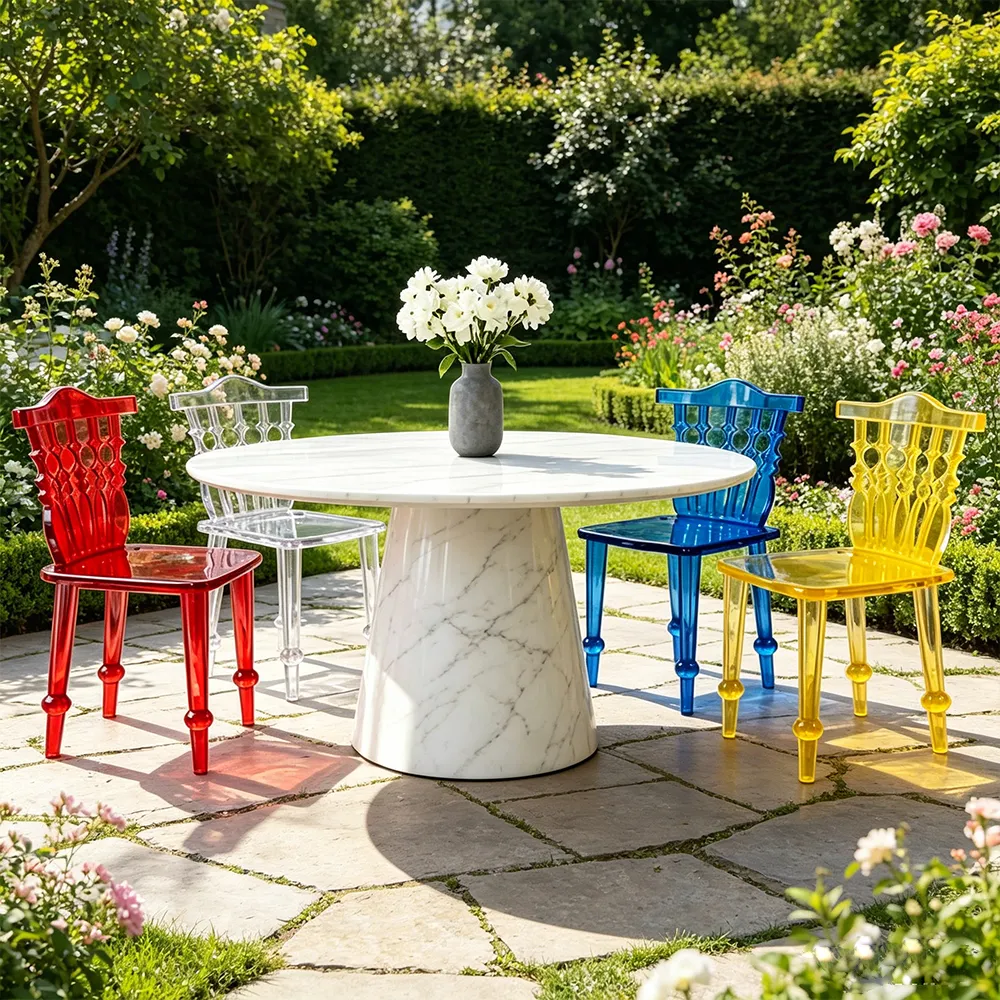
Custom Acrylic Chair
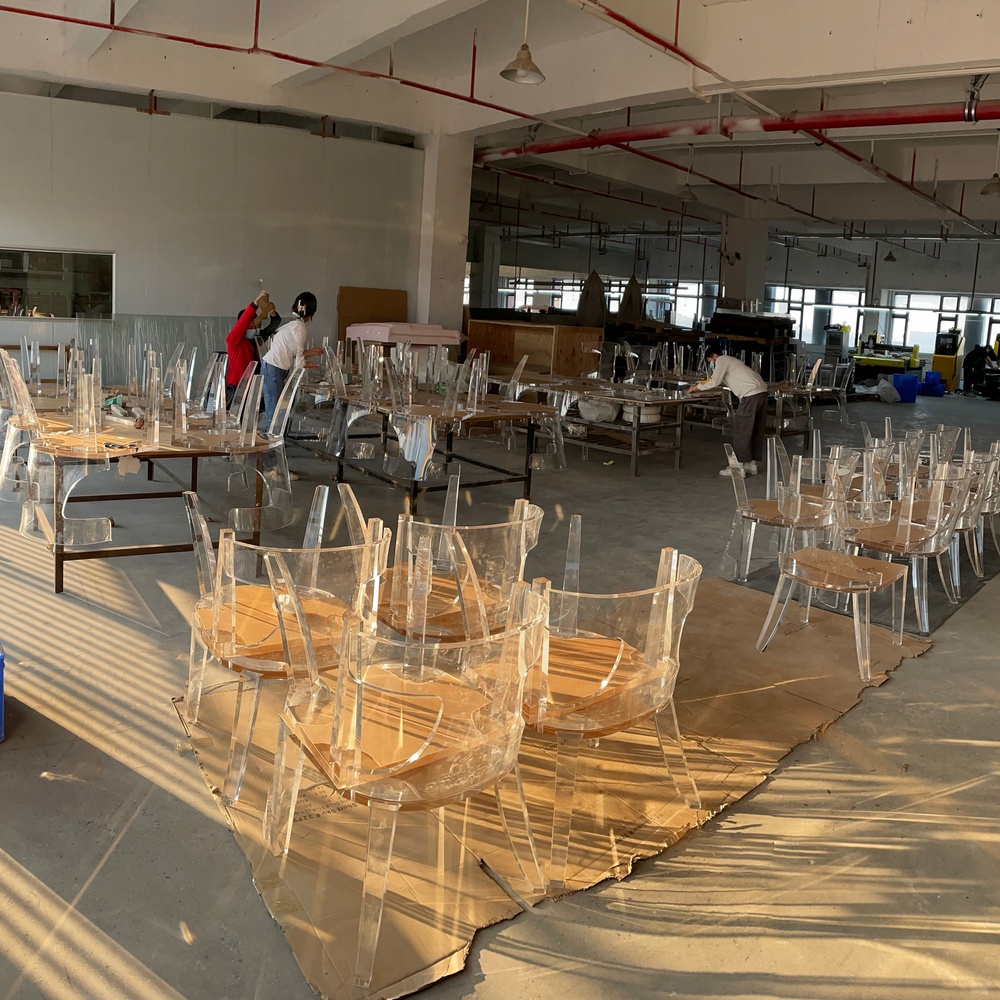
JFM is a global supplier of custom acrylic Chairs. We offer customized services based on your specific needs and specifications. JFM is an outstanding manufacturer that meets your acrylic customization requirements. If you are looking for custom acrylic chair solutions, JFM is your ideal choice – a trustworthy and excellent manufacturer!








Quick specifications
| Item | Details |
|---|---|
| Product Scope | JFM manufactures acrylic dining chairs, side chairs, armchairs, lounge chairs, office chairs, bar and counter stools, upholstered chairs, and mixed-material seating from drawings or reference samples. |
| MOQ | 50–200-piece MOQs |
| Sample Timing | JFM offers 3–7-day sample production. |
| Production Lead Time | We publish 10–35-day bulk production schedules. The exact time will depend on the order quantity and the complexity of the product. |
| Size, Thickness and Load | We provide 5–100 mm acrylic processing for furniture. |
| Material and Finish | 92% light-transmission cast acrylic, available in clear, smoked grey, tea, milky white, gradient, frosted, and custom-tinted finishes. |
| Assembly and Packing | Furniture packs use a PE bag, foam separation, foam board, wooden case, and pallet. JFM records the assembly state and carton plan by SKU. |
| Shipping Terms | We supply protective packing and arrange EXW, FOB, DDU, or DDP delivery. Our delivery time will strictly adhere to the time stipulated in the contract and will be delivered as scheduled. |
Acrylic Chairs Developed for Production, Use, and Reordering
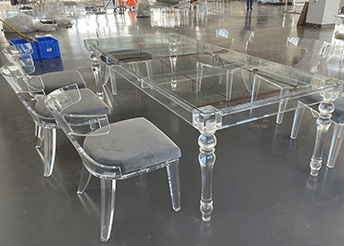
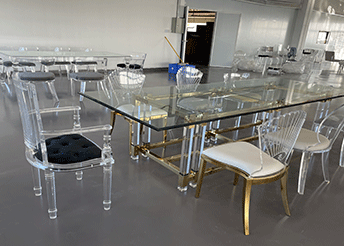
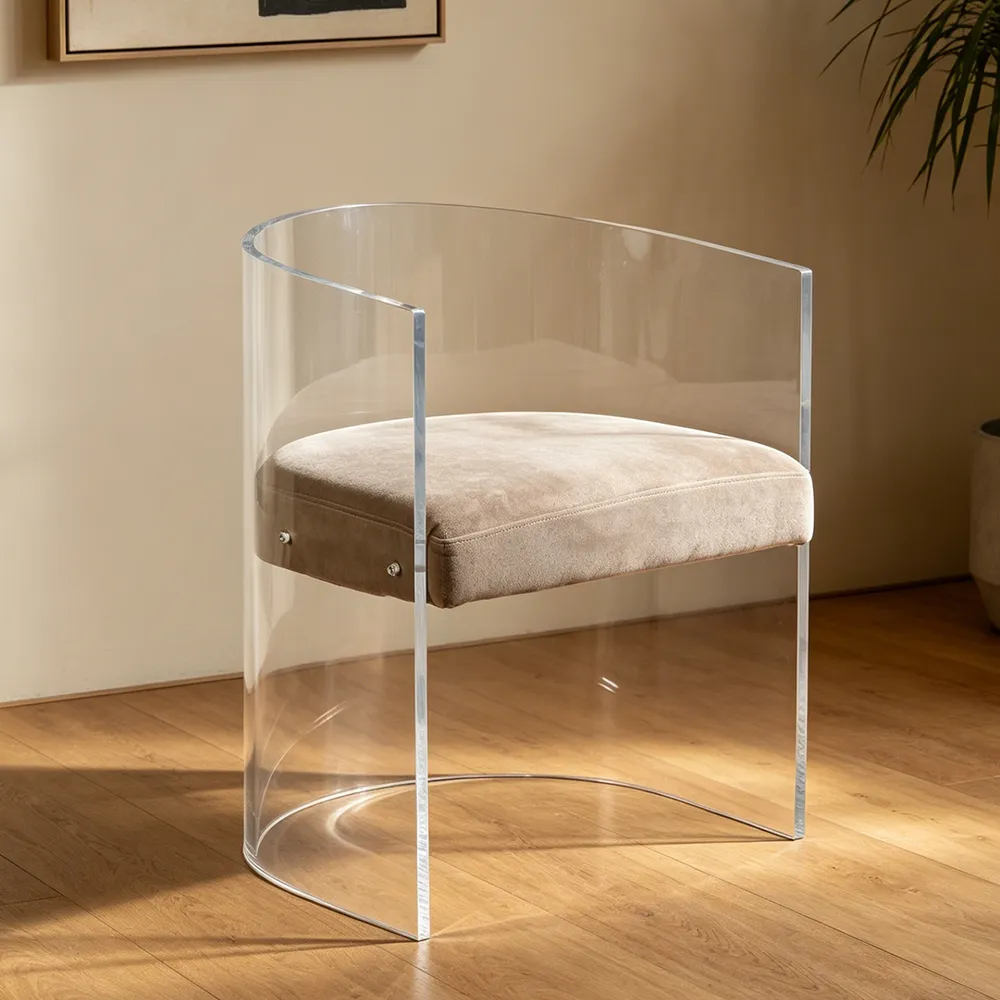
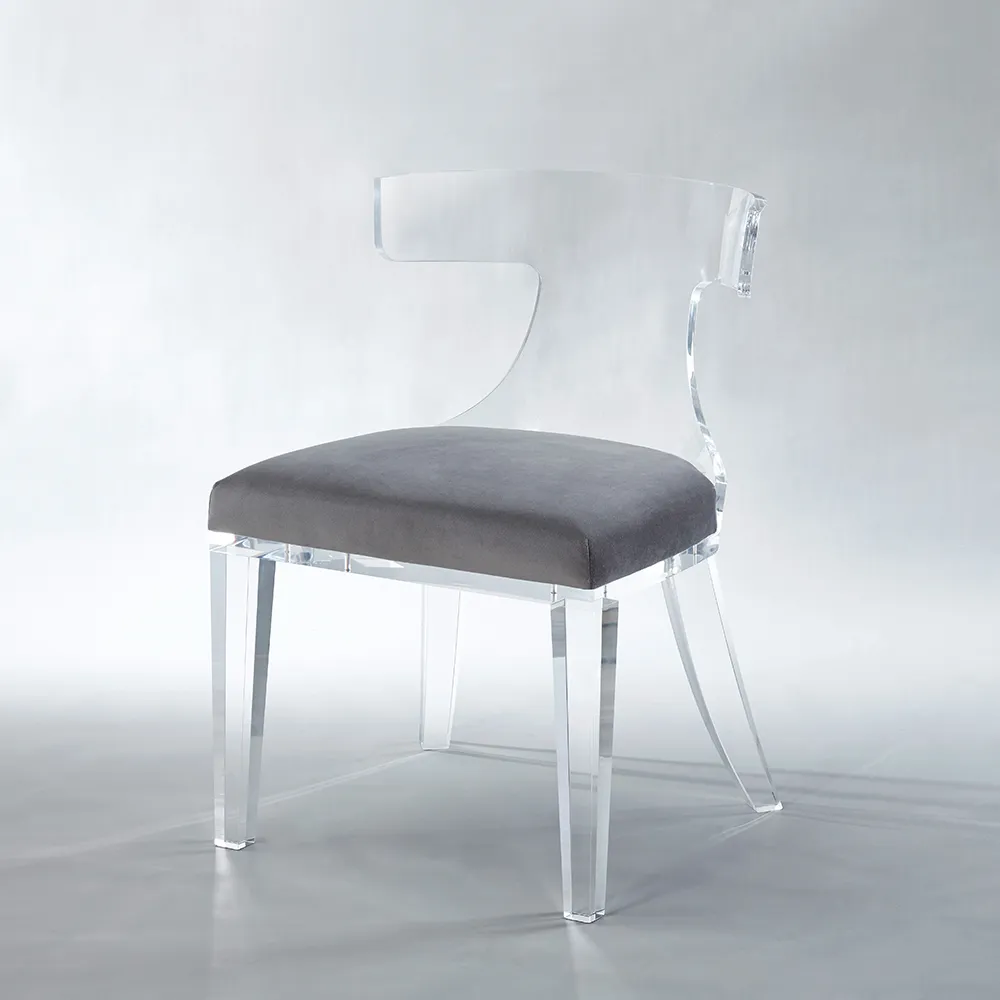
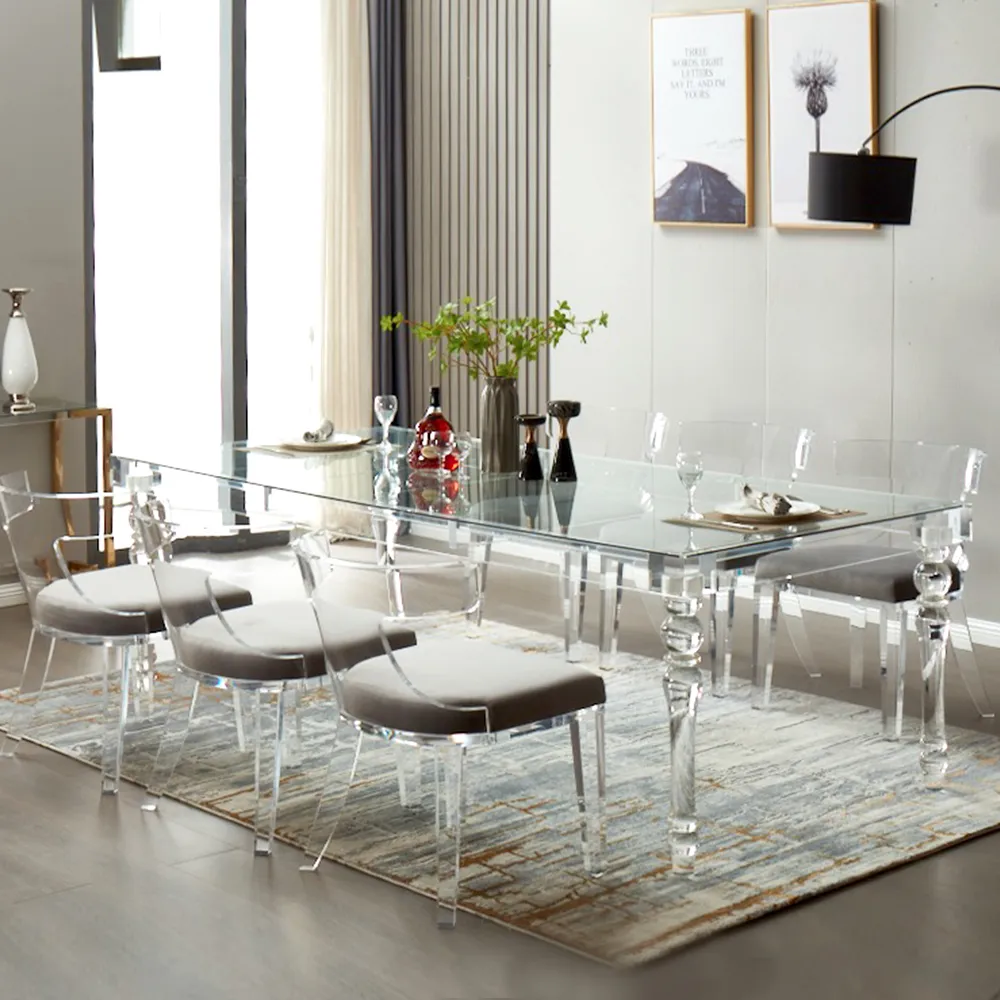
We manufacture custom acrylic chairs for furniture brands, wholesalers, designers, hospitality groups, and commercial projects. The market often uses acrylic, Lucite, Perspex, Plexiglas, polycarbonate, and resin for visually similar clear chairs, so every project specification records the actual material and manufacturing route by component. We develop the chair around seat height and depth, back angle, arm clearance, structure, joints, feet, upholstery, finish, testing, assembly, and packing. The approved sample becomes the production reference for appearance, comfort, stability, hardware, and labeling, helping buyers compare quotations correctly and keep replacement or repeat-order chairs compatible with the original program.
Our Products
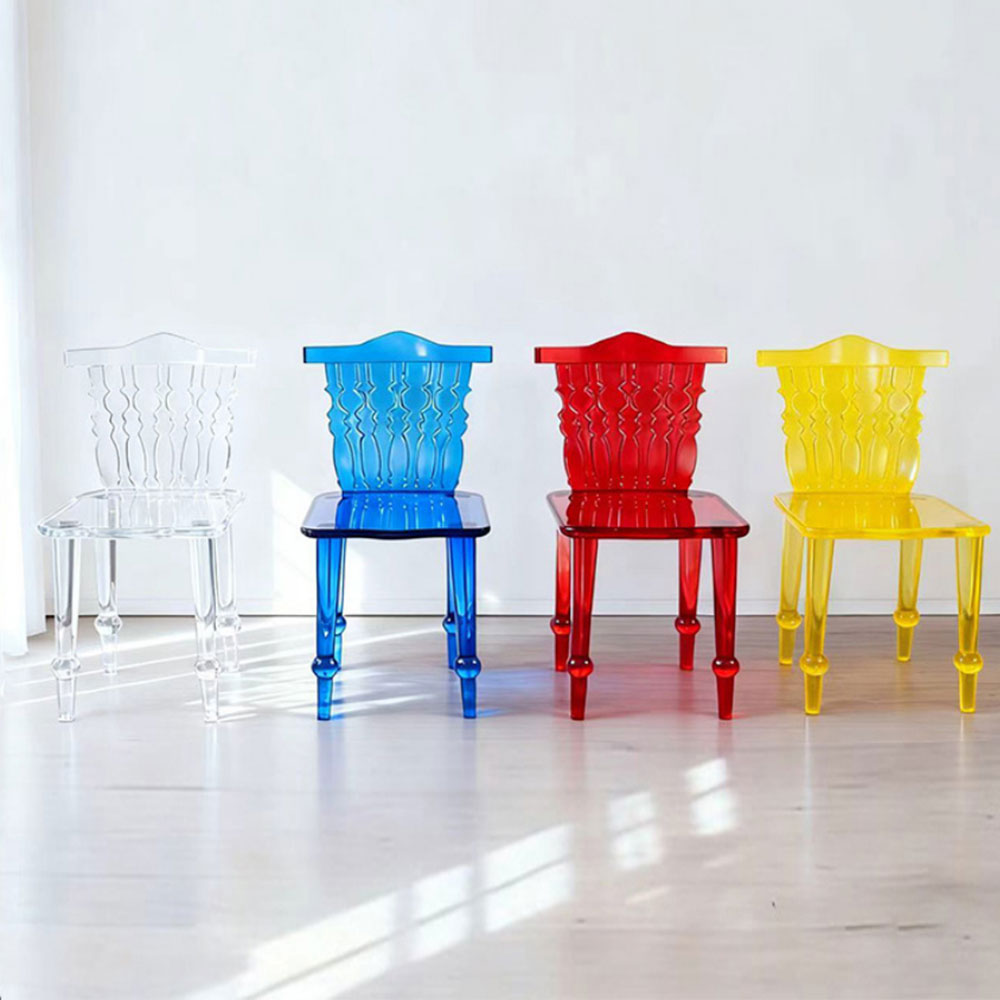
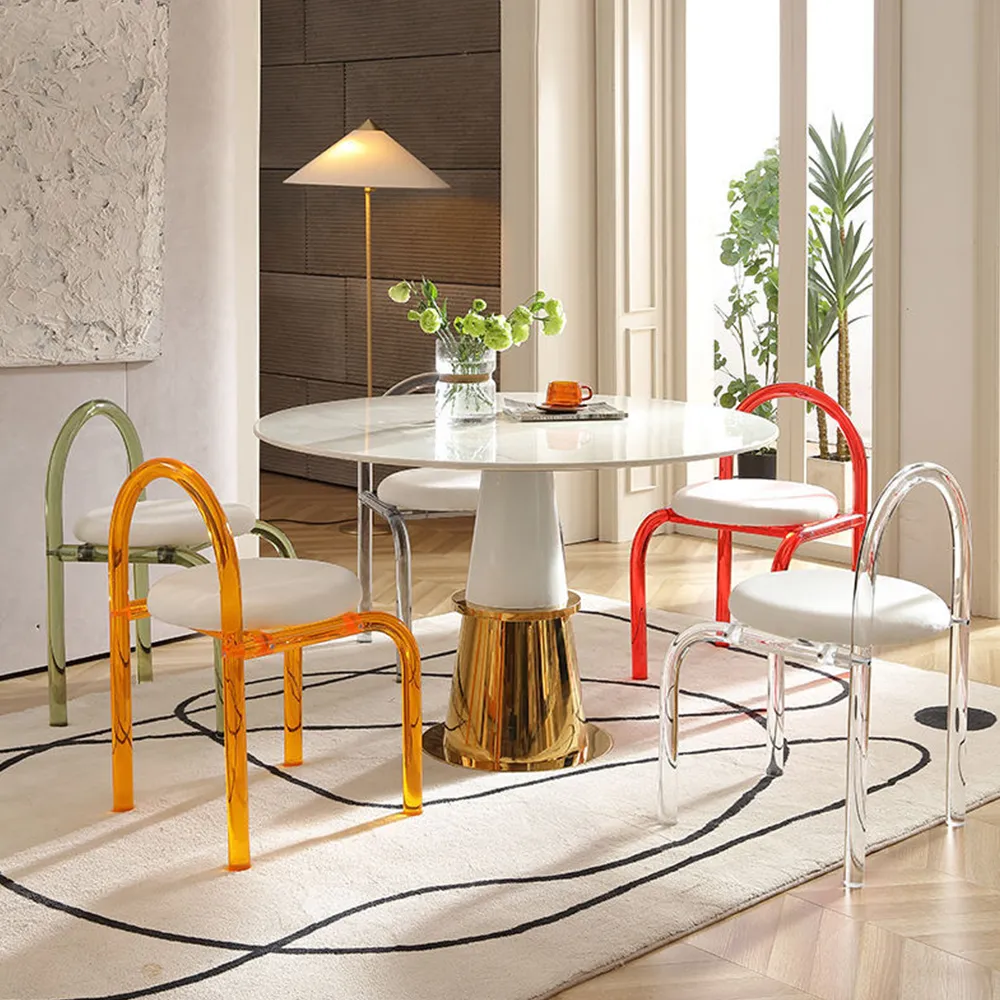
Acrylic Dining Chairs
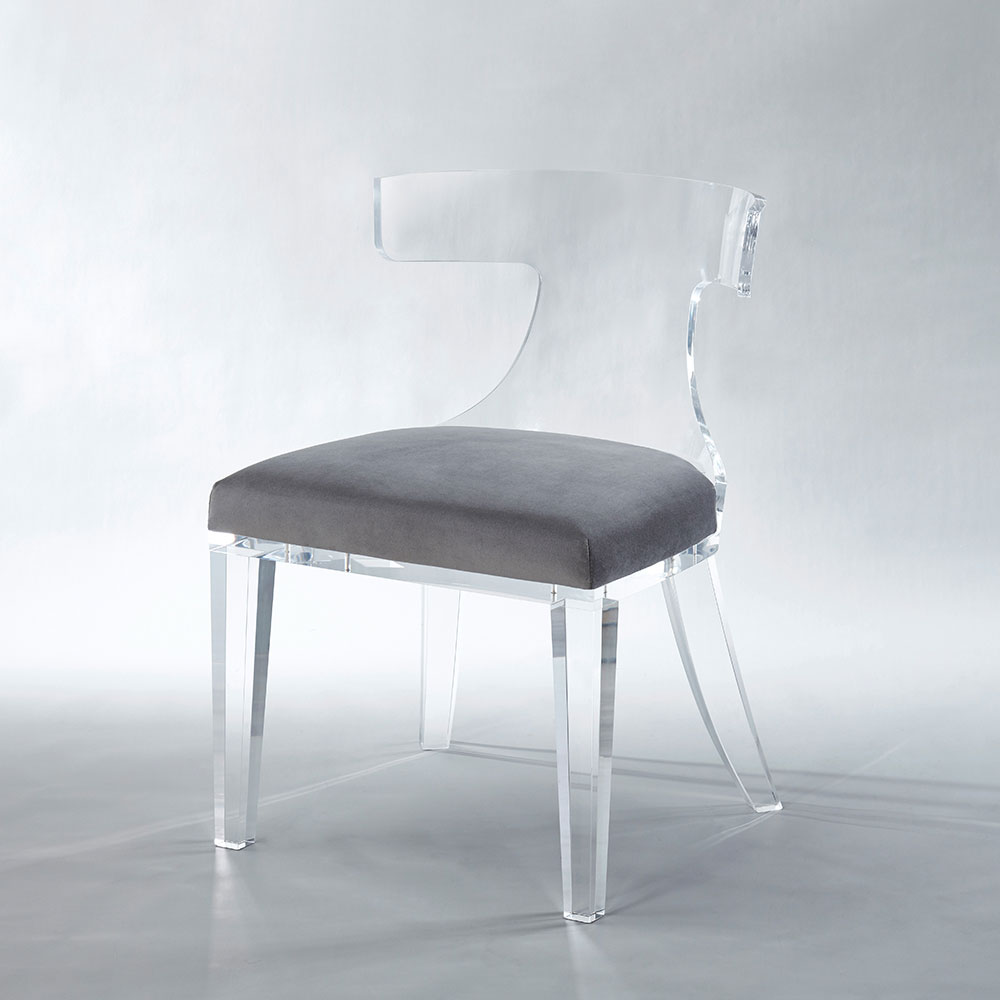
Acrylic Side Chairs
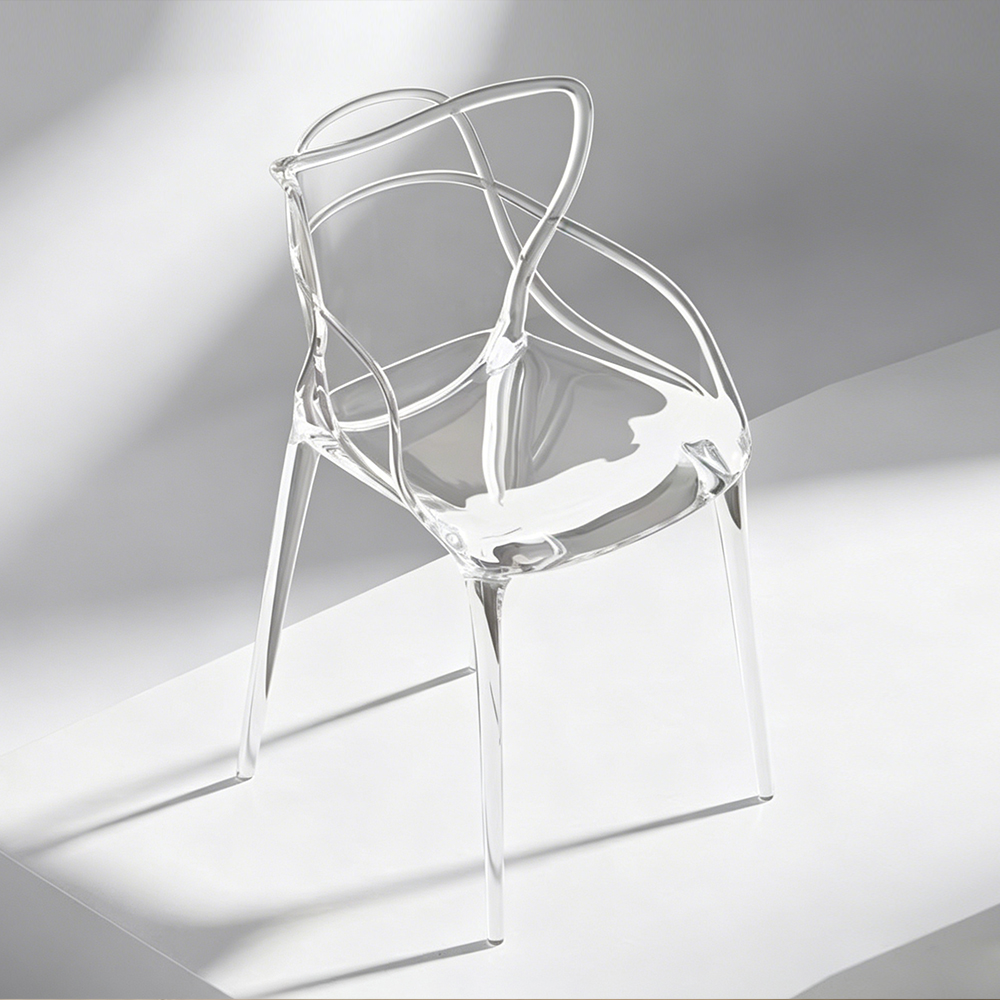
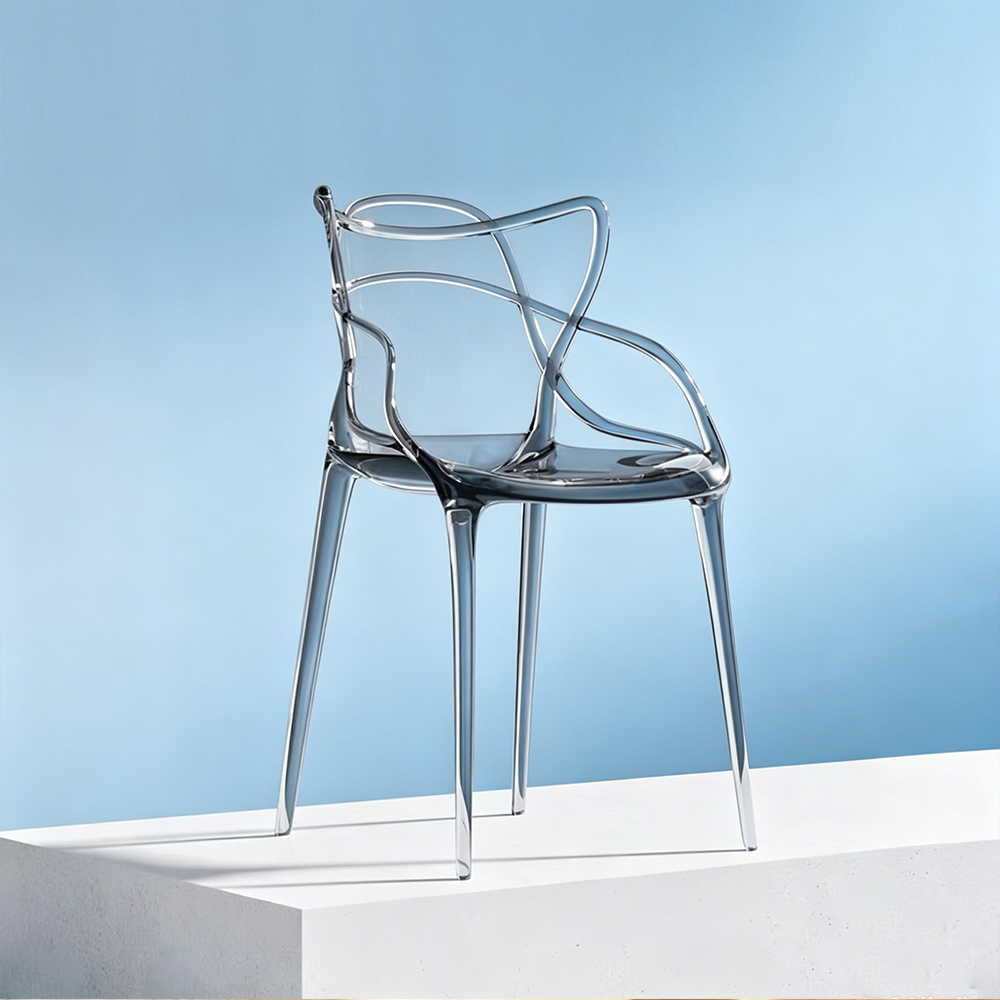
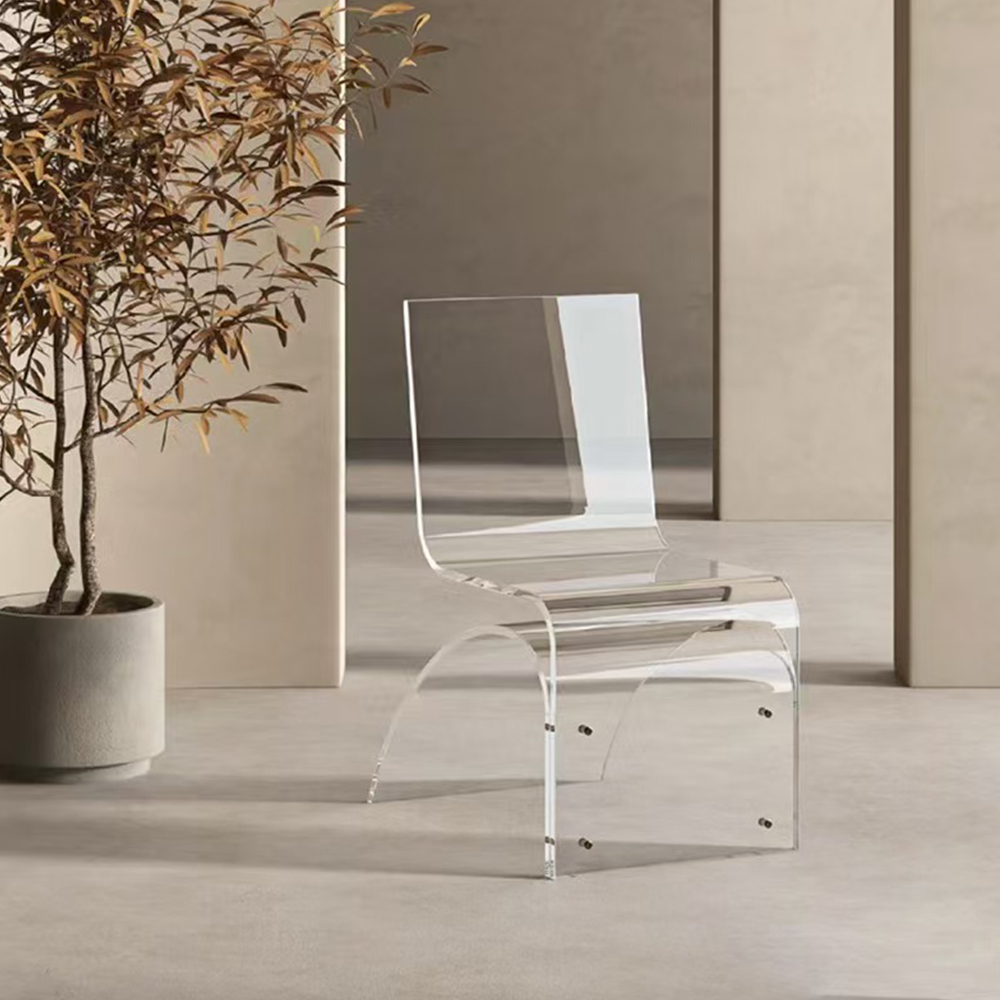
Acrylic side chairs support dining, visitor, meeting, and occasional-seating programs where footprint, access, easy placement, and consistent batch appearance matter.
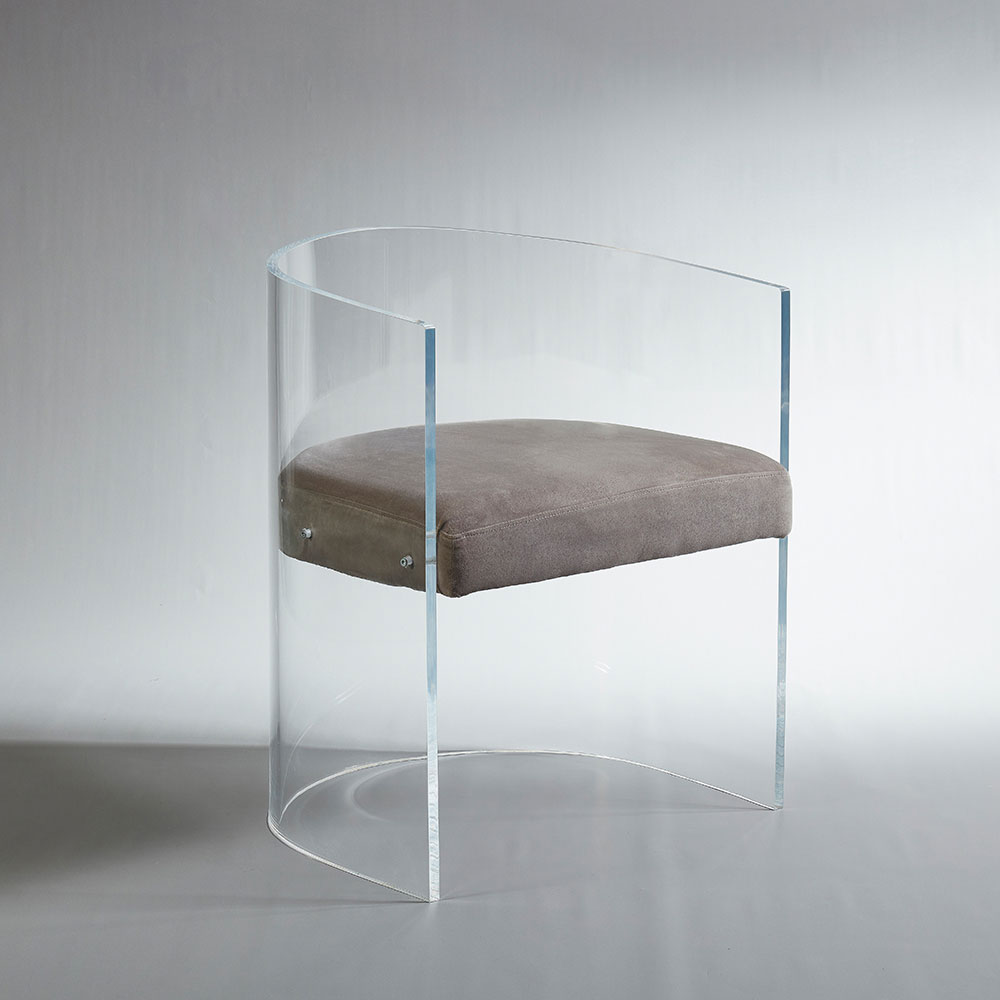
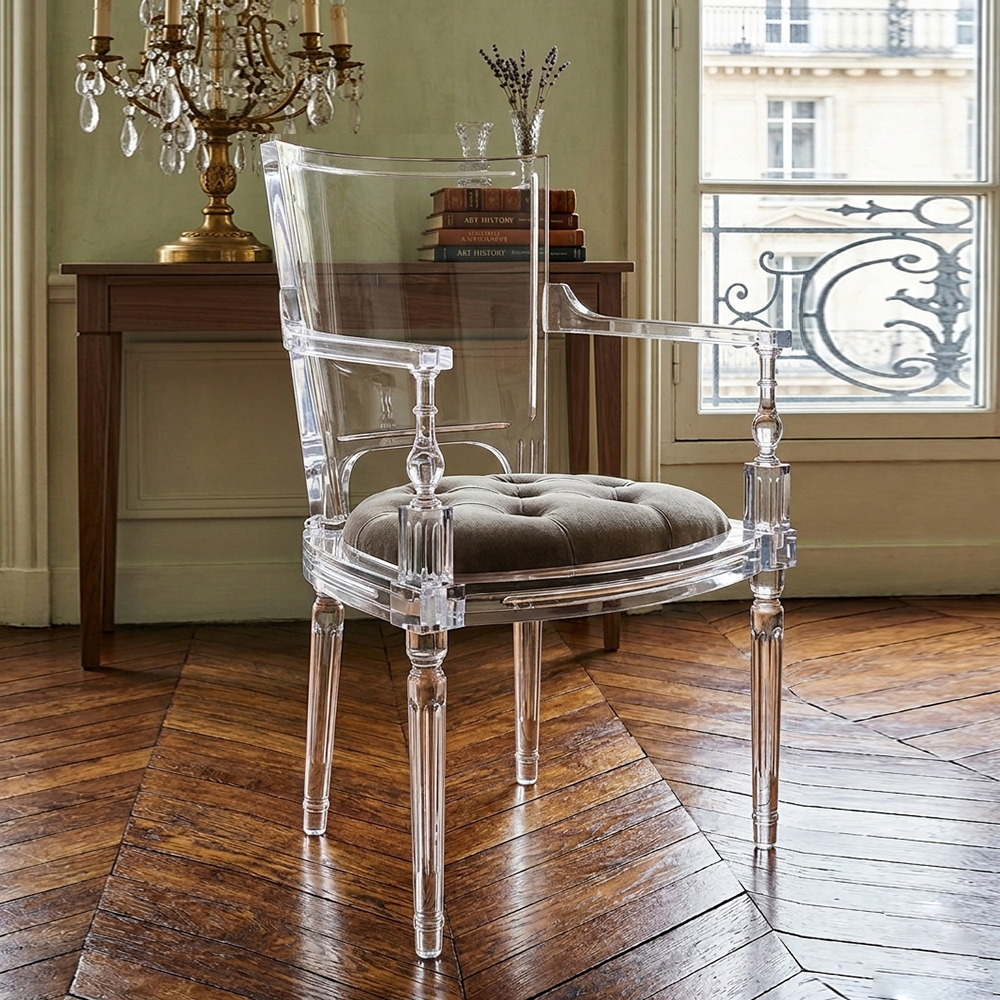
Acrylic Armchairs
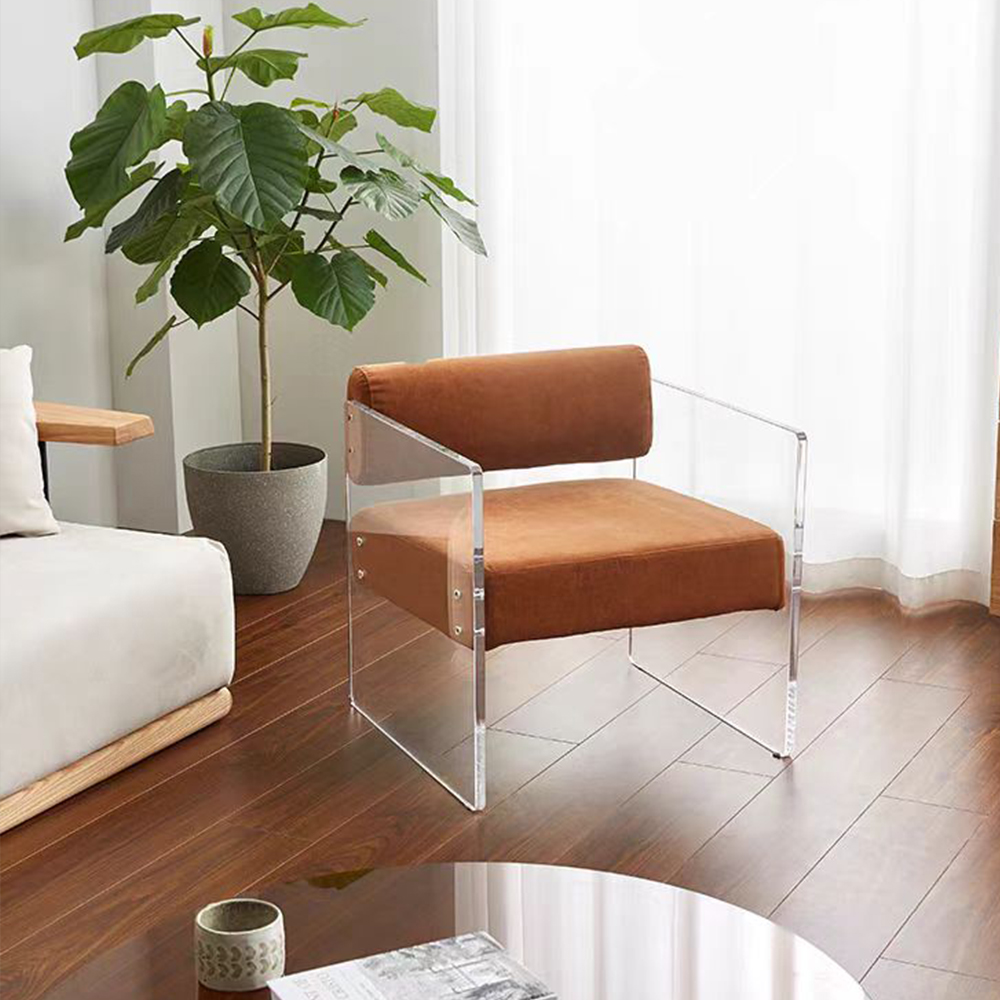
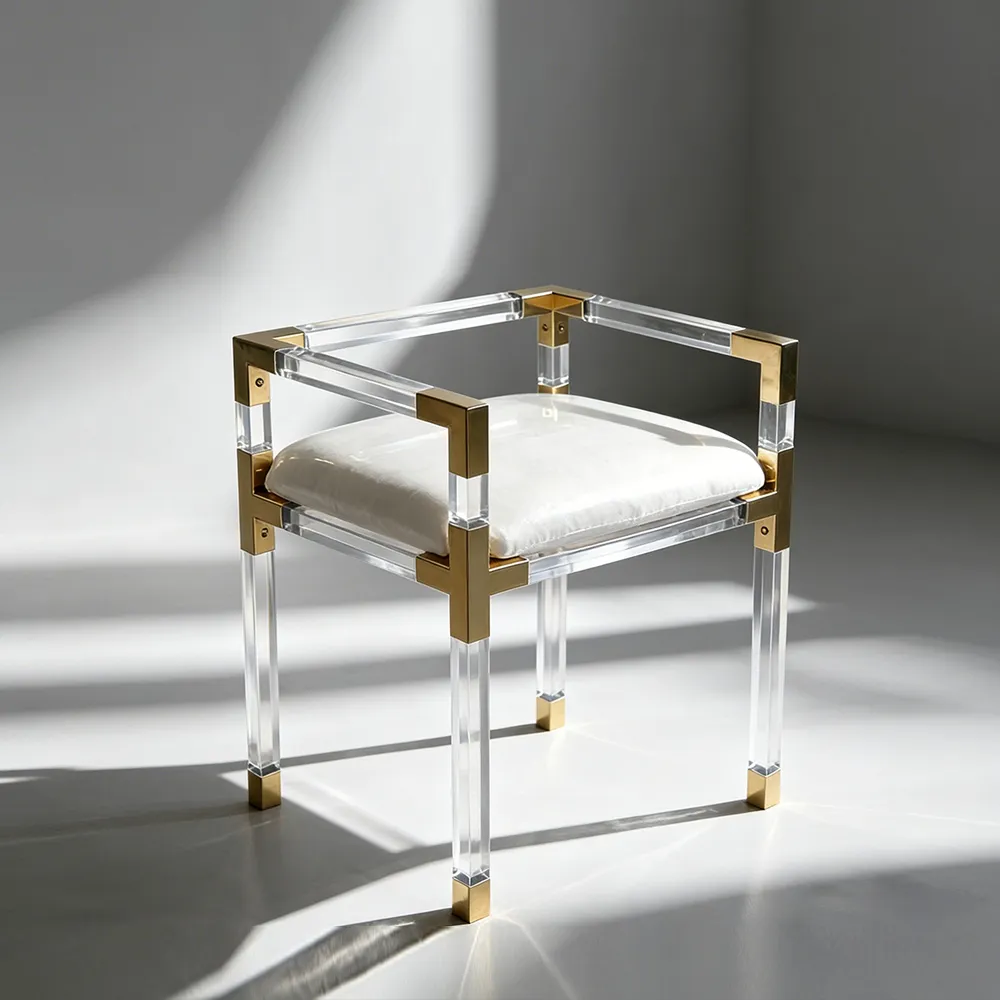
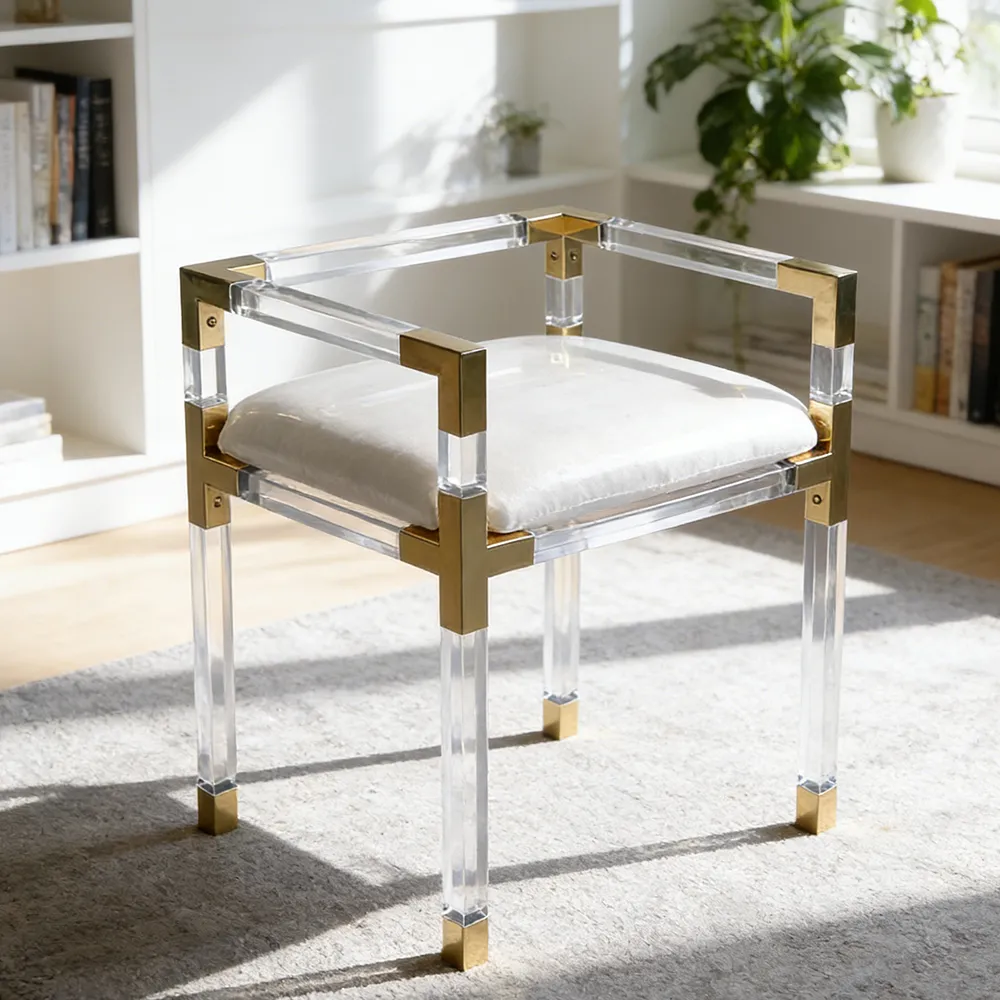
Acrylic armchairs add positioning and support. We coordinate arm height and width with table clearance, aisle space, user transfer, upholstery, and the intended floor plan.
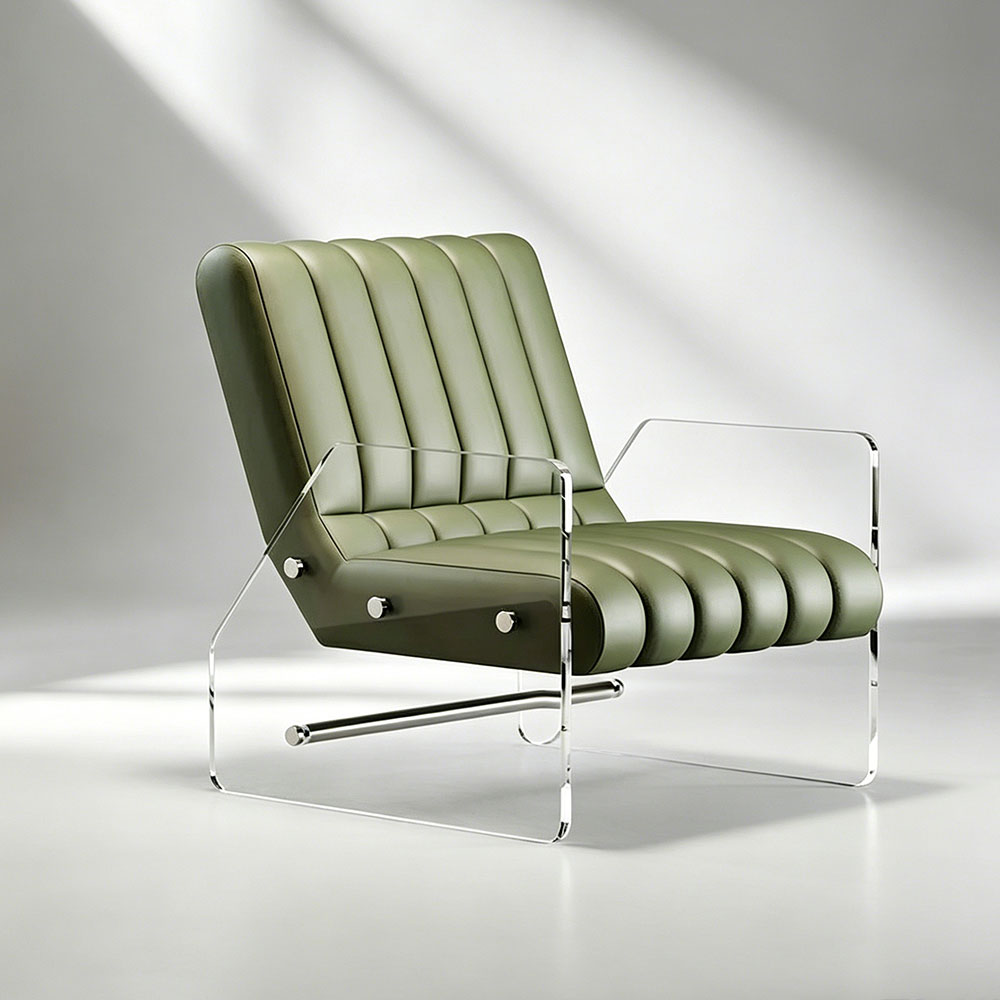
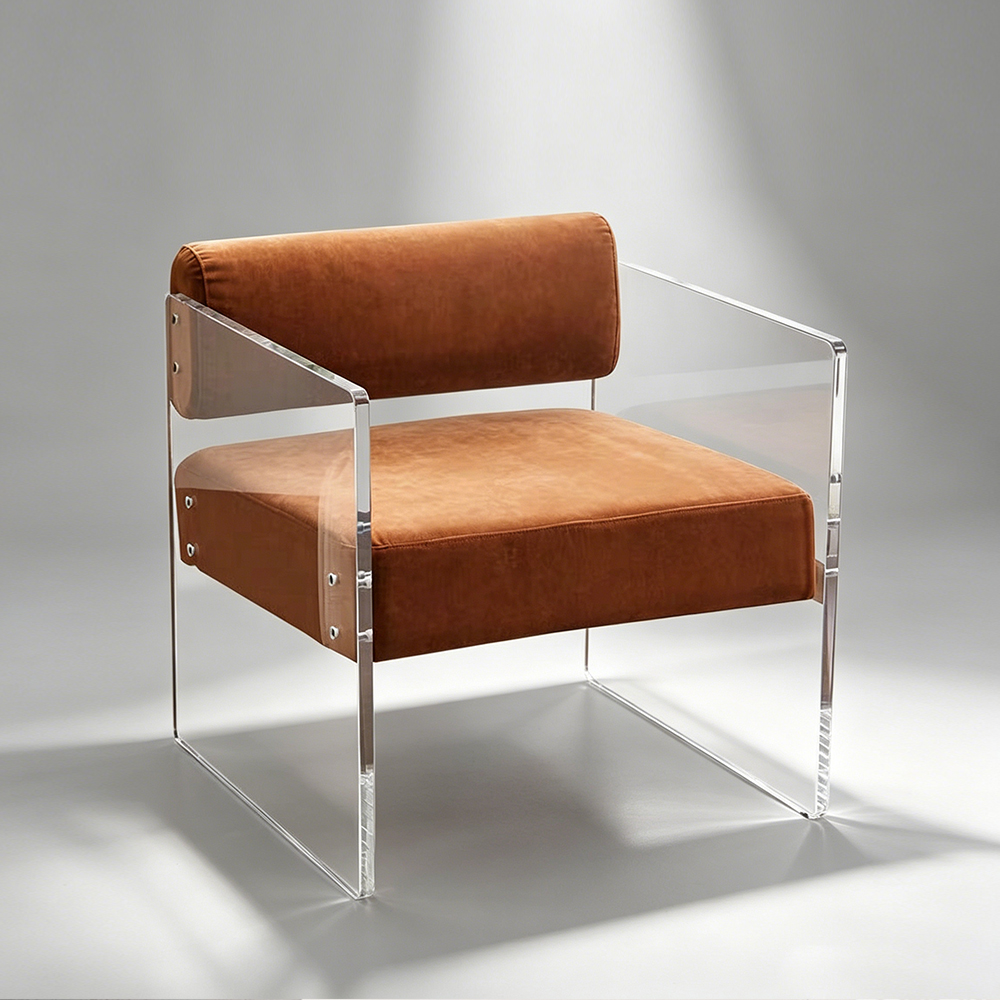
Acrylic Lounge Chairs
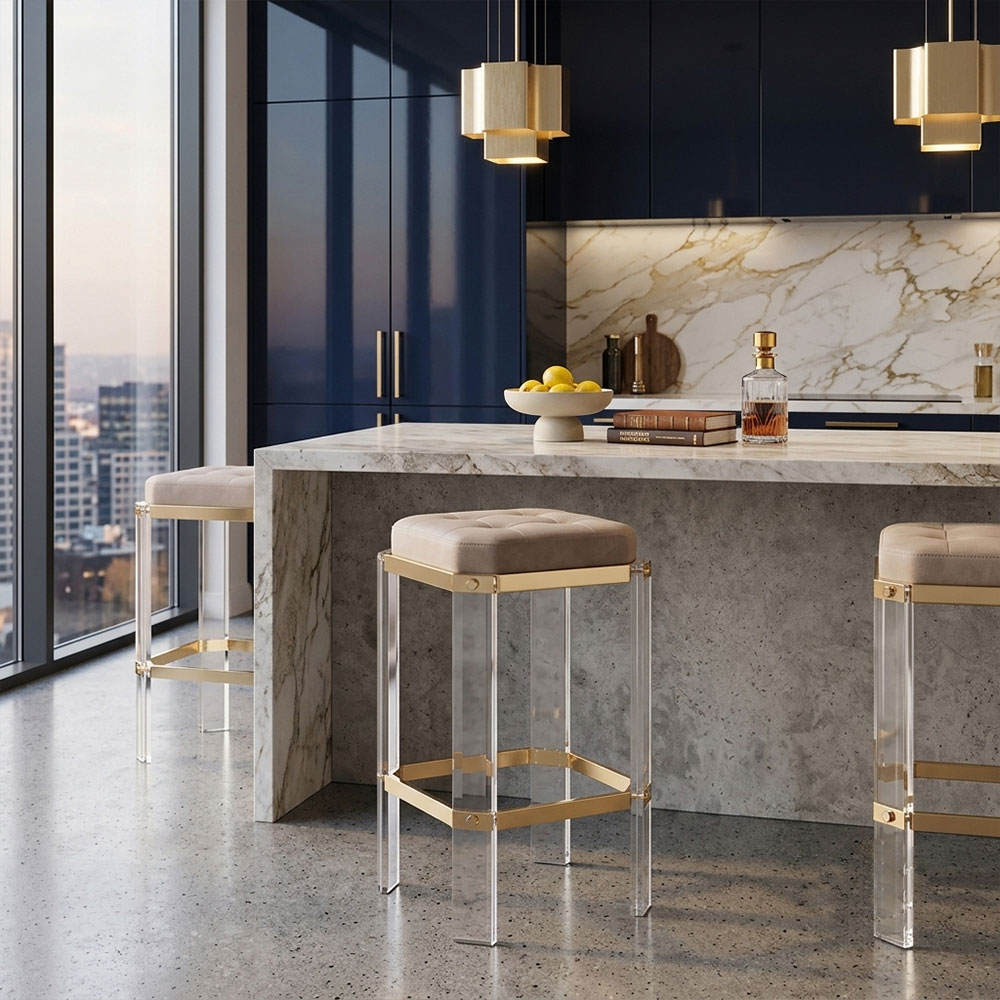
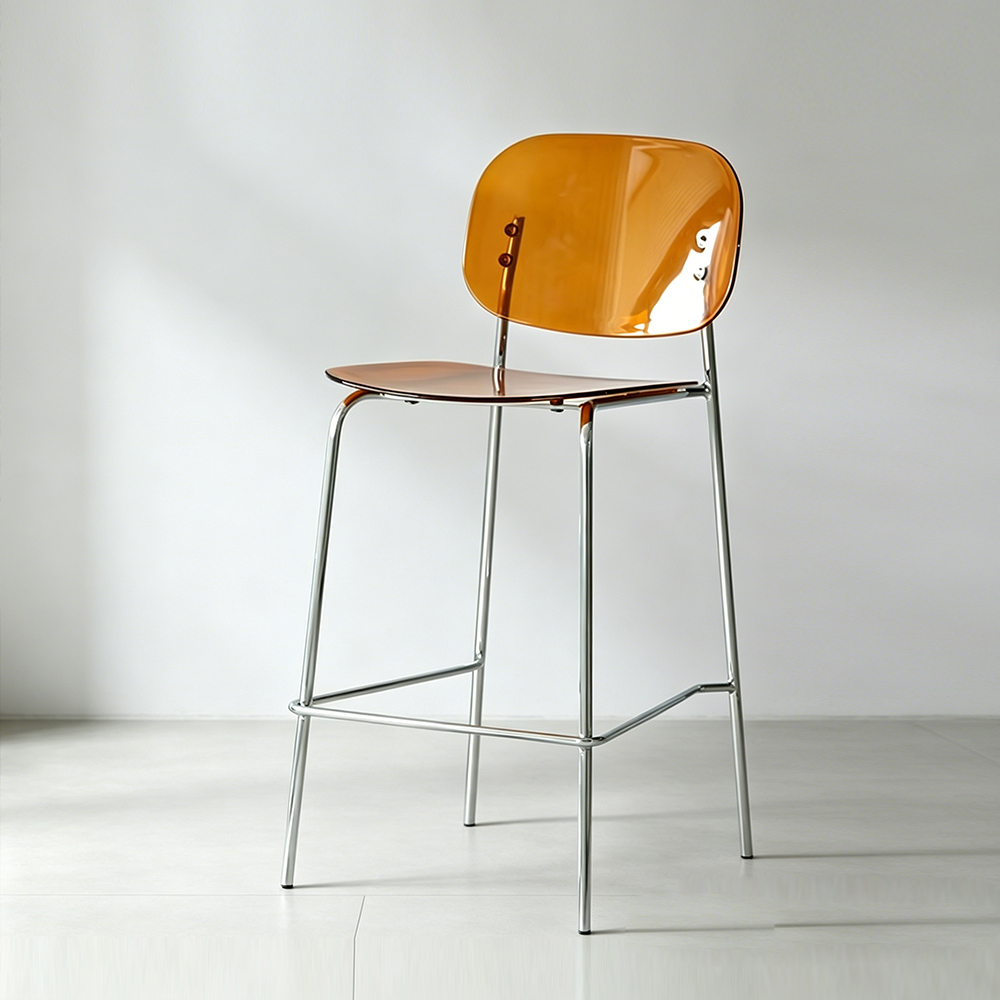
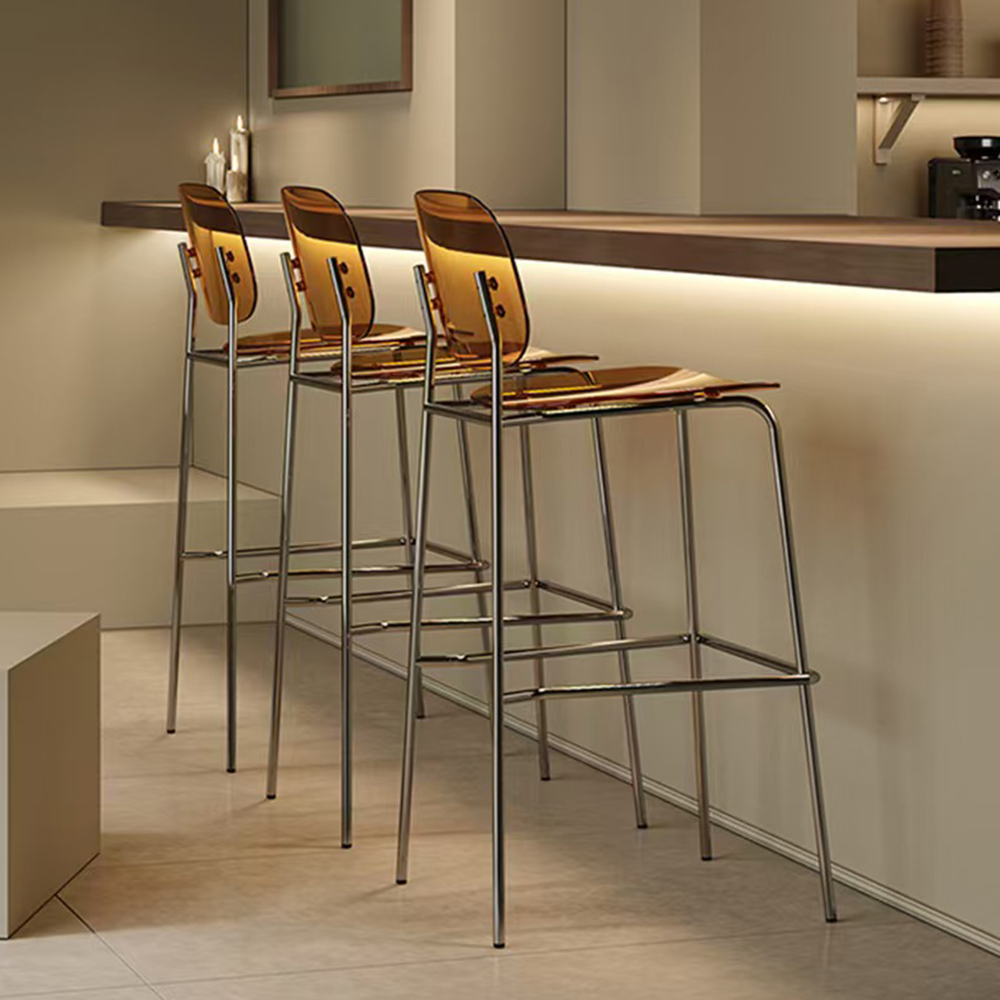
Acrylic Bar & Counter Stools
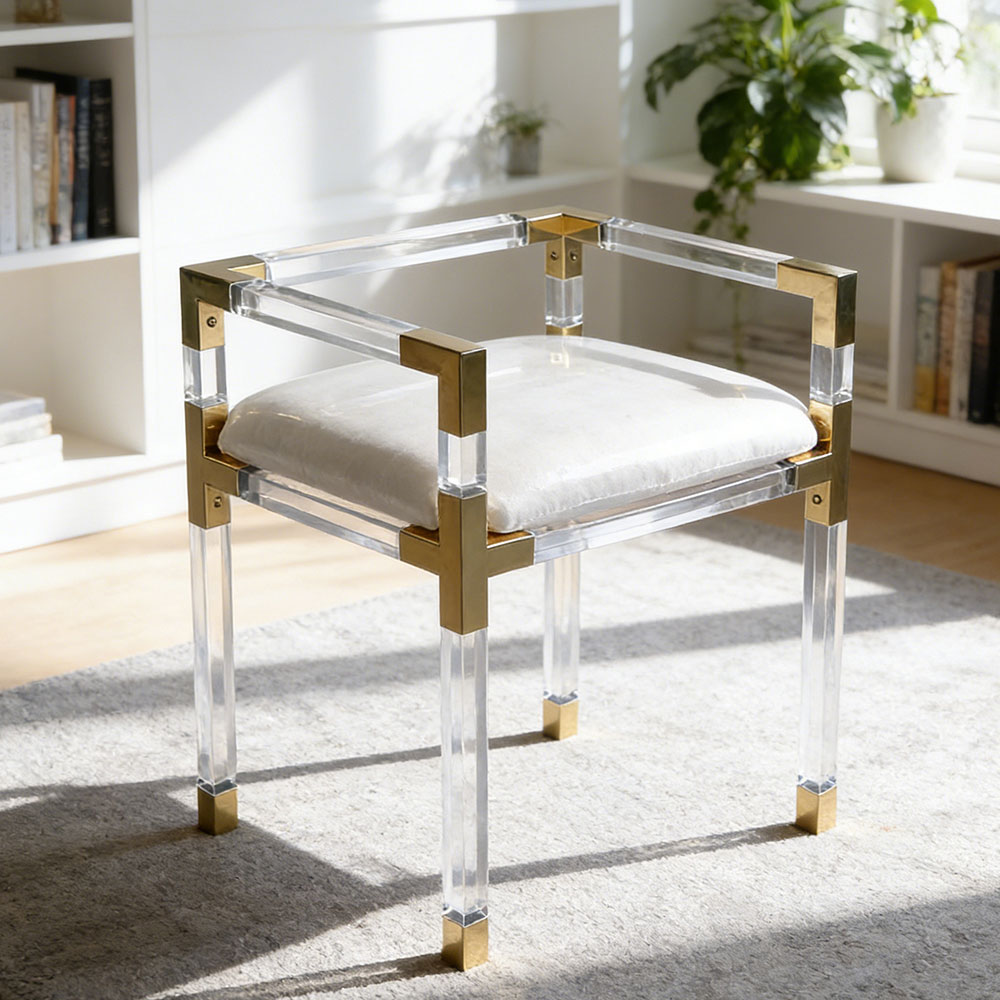
Acrylic Office Chairs
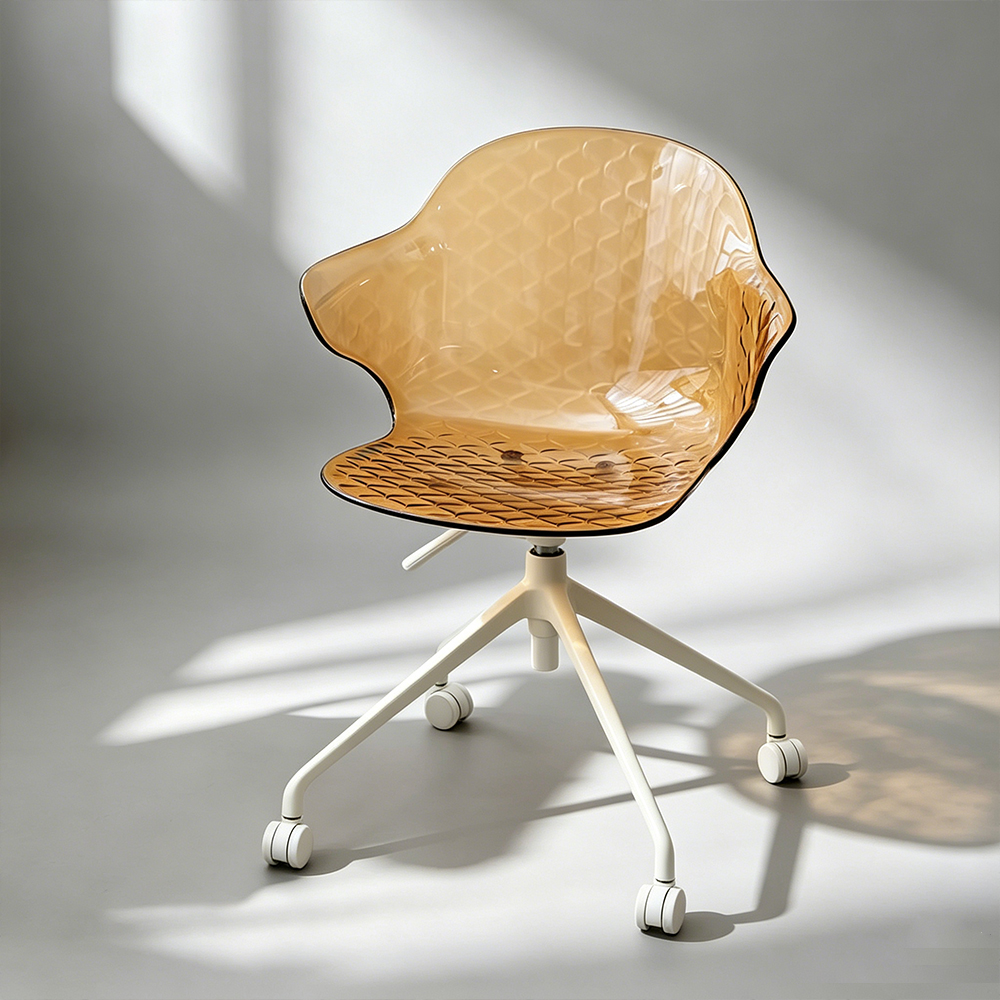
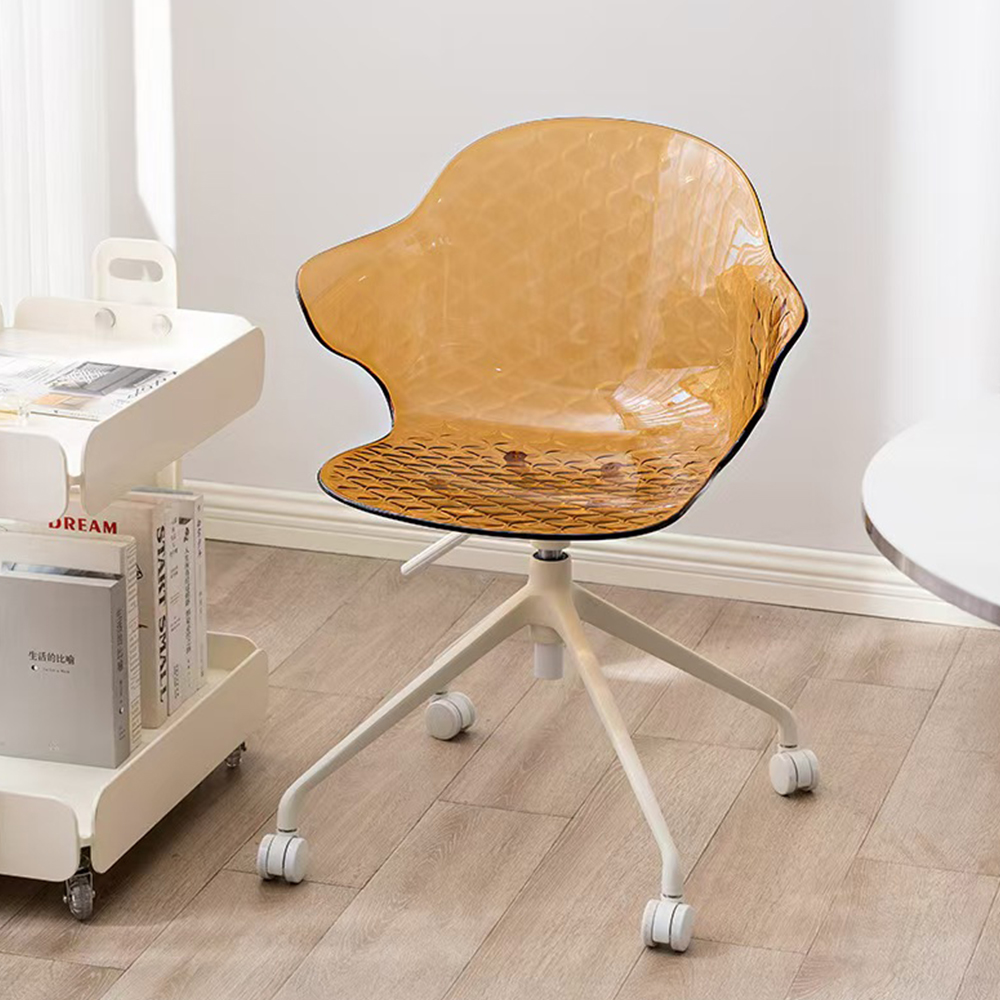
Acrylic office and visitor chairs are developed for the stated work setting and compatibility with custom acrylic desks, with clearance, sitting period, mobility, adjustment, base type, and applicable performance standard.
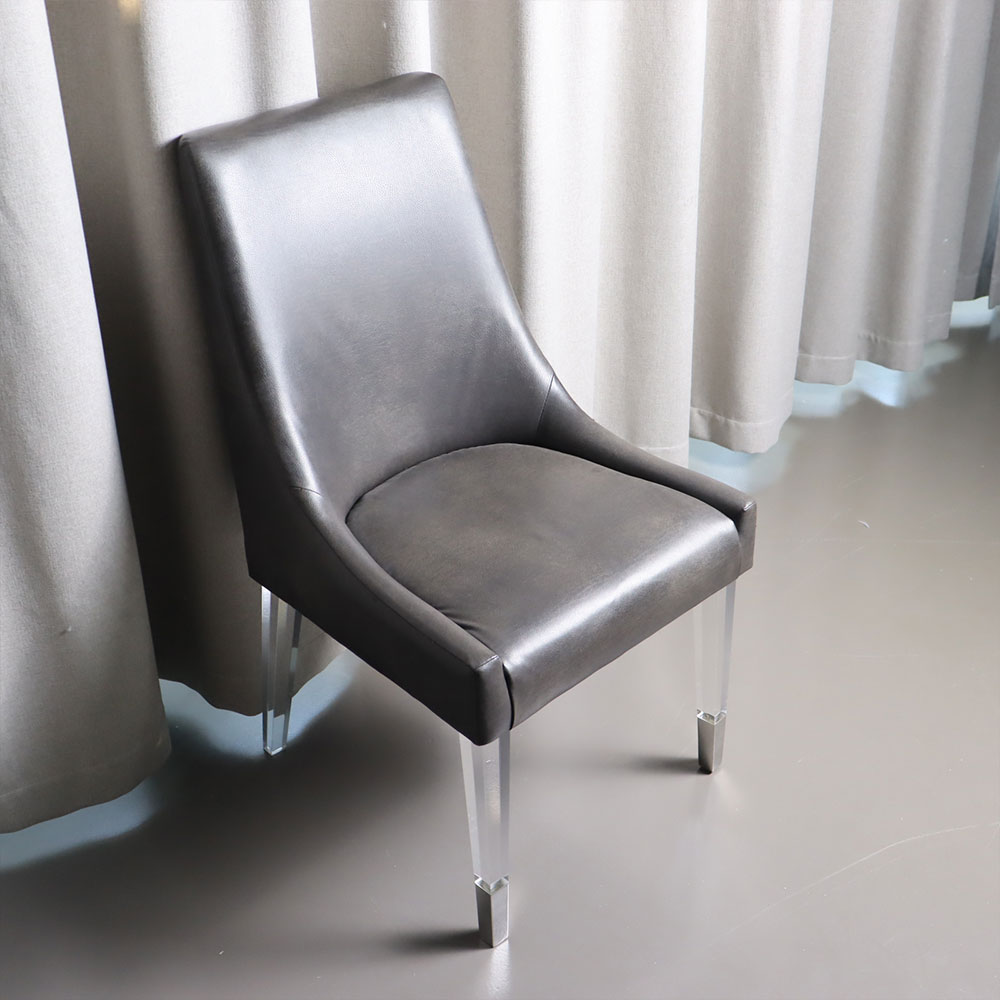
Upholstered Acrylic Chairs
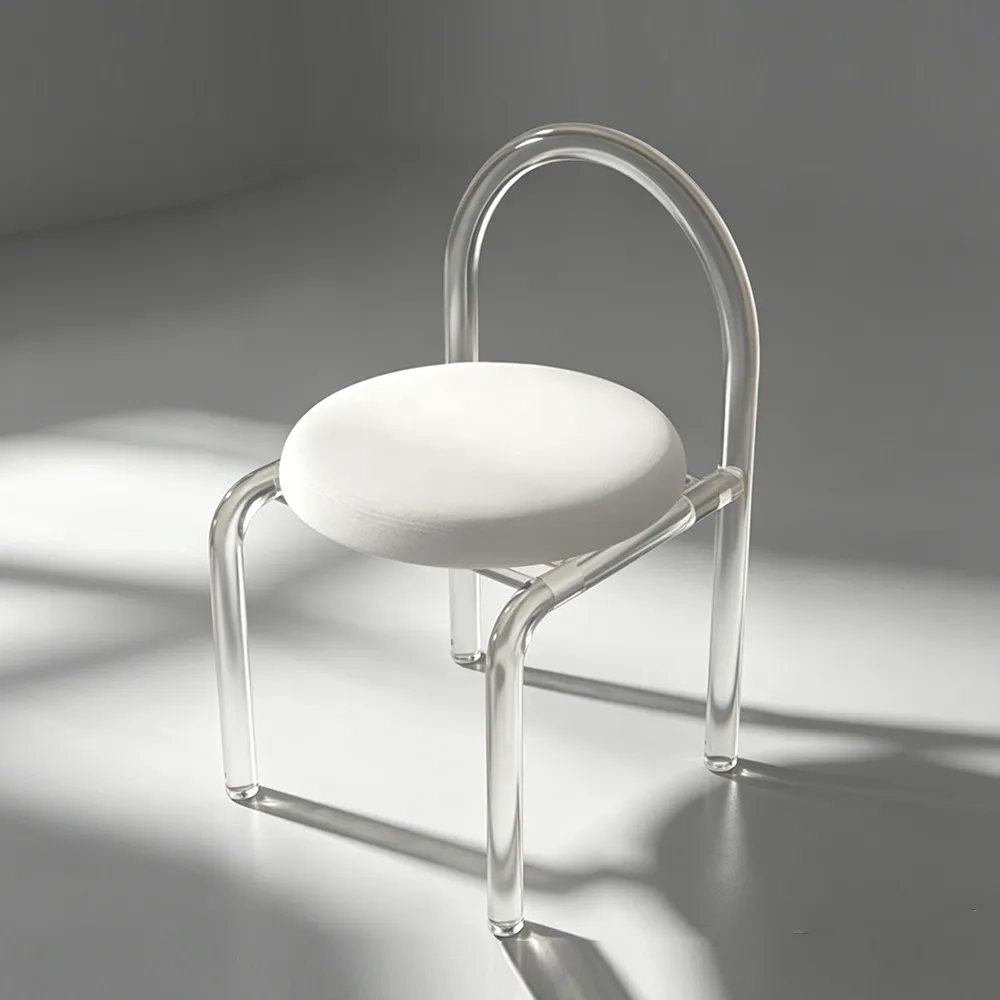
Upholstered acrylic chairs use seat pads, removable cushions, or bonded upholstery specified by foam, fabric or leather, attachment, seam, color reference, cleaning, and replacement method.
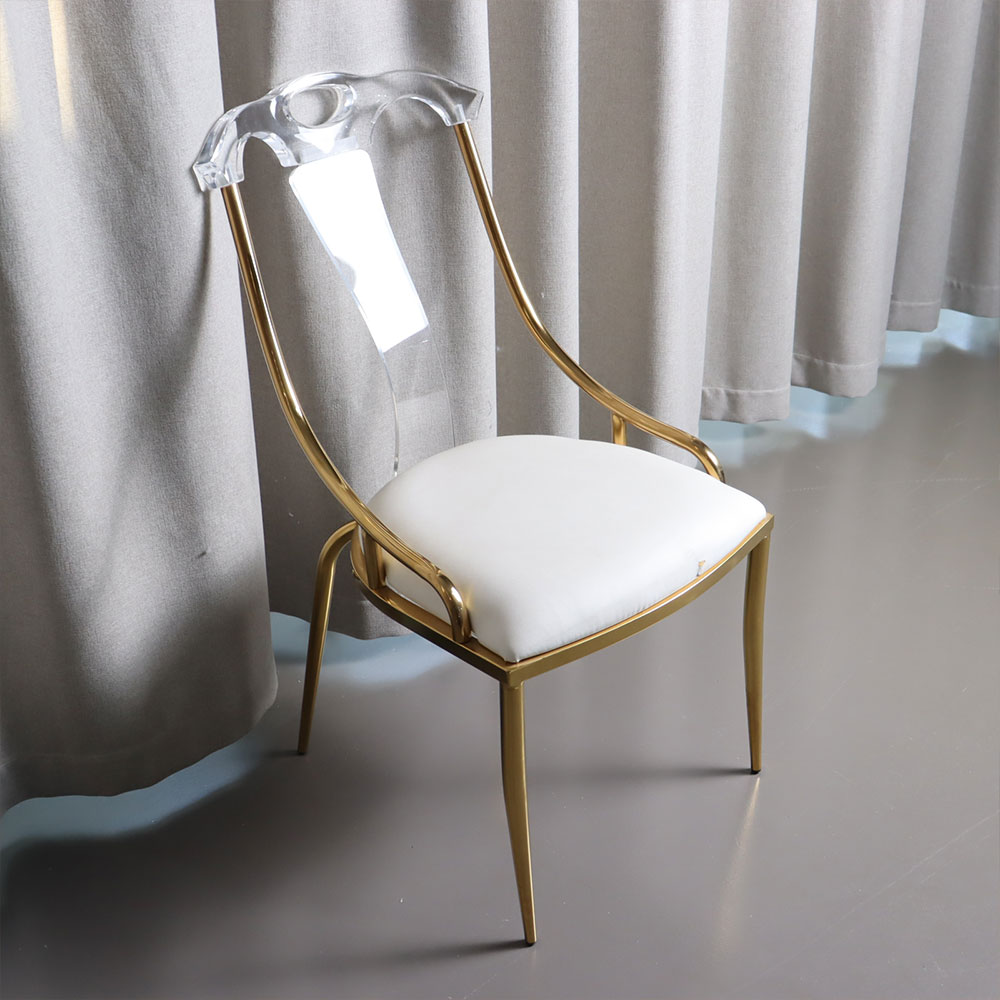
Acrylic Chairs with Metal or Wood Bases
Acrylic chairs with metal or wood bases use drawing-controlled interfaces, inserts, hardware, finishes, assembly steps, and replacement parts for every mixed-material construction.
Customization Range
Table Size and Overall Size
Record overall width, depth, height, seat height and depth, back angle, arm height, clearances, footprint, and floor-contact points in millimetres.
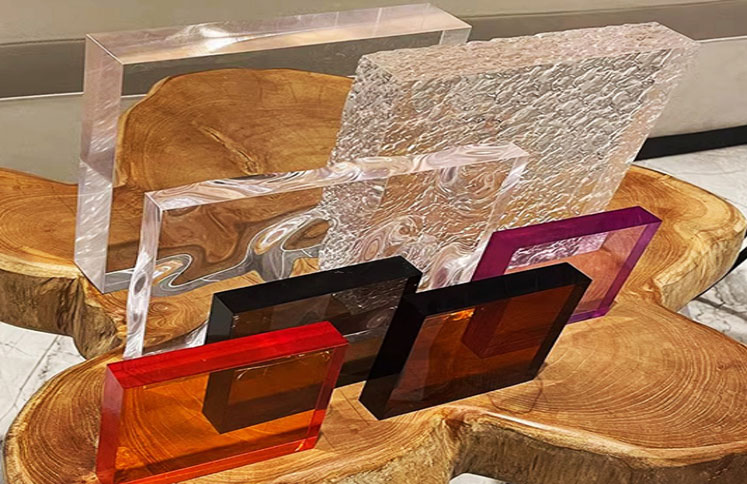
Acrylic Material Type
Specify PMMA, polycarbonate, or another resin by component, plus grade, sheet or molded form, thickness, color, transparency, and approved material reference.
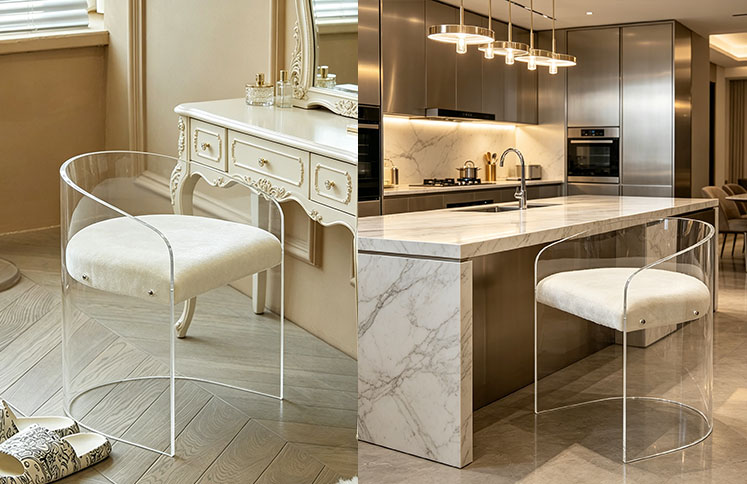
Table Structure and Use
Choose dining, side, arm, lounge, office, bar, counter, upholstered, stackable, knock-down, mixed-material, or sculptural seating for the stated duty cycle.
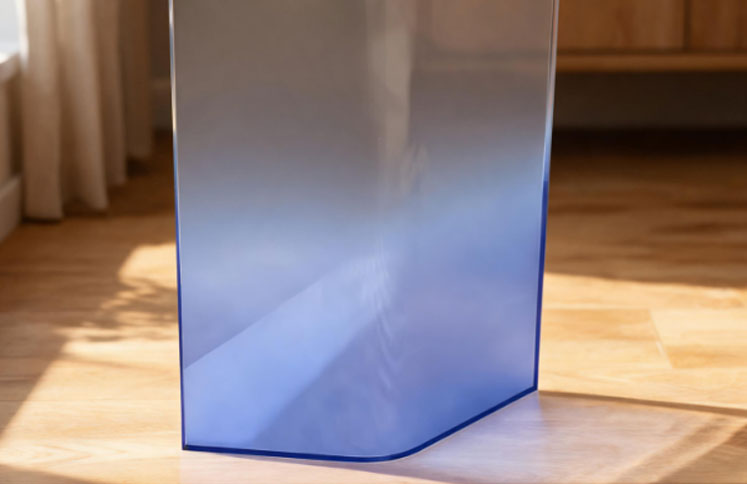
Surface Treatment
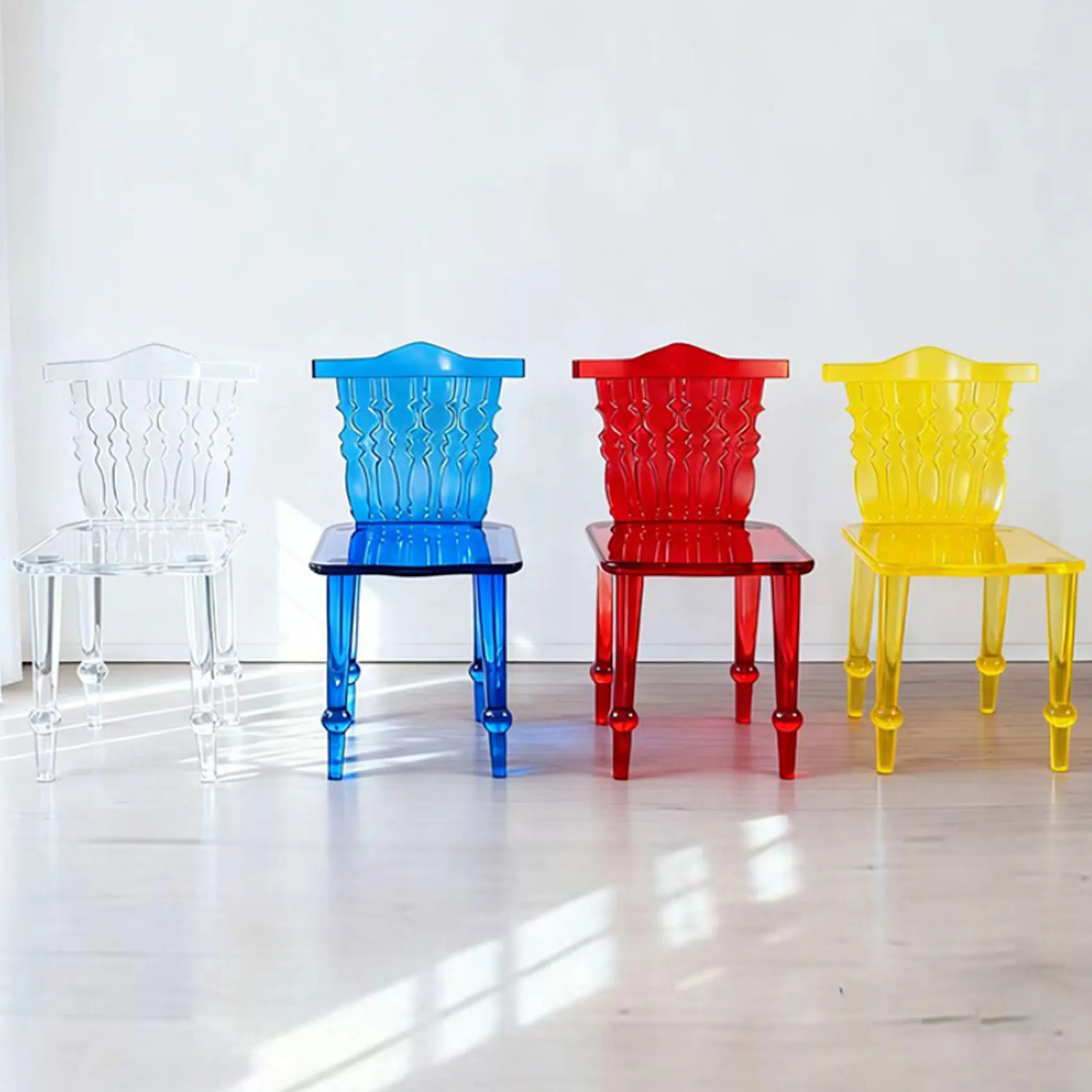
We produce clear, smoked, tea, colored, frosted, gradient, sandblasted, printed, engraved, and custom-tinted finishes from the approved reference.
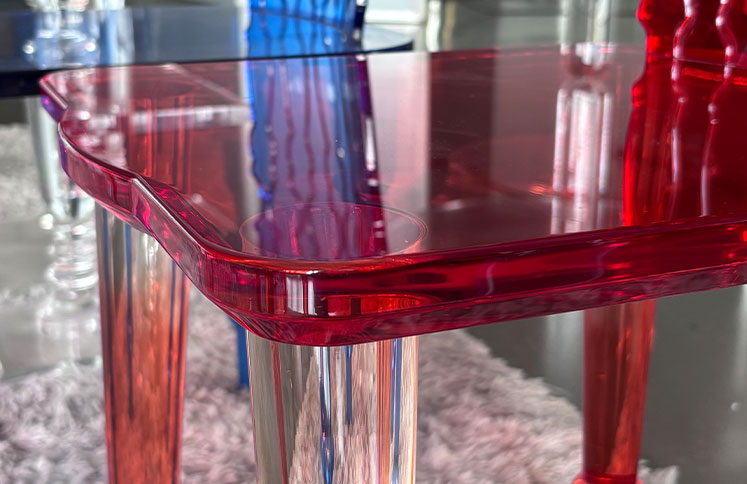
Edge and Corner Finish
Specify polished, matte, rounded, chamfered, or protected edges and define the acceptable radius at hands, legs, seat fronts, arms, and exposed corners.
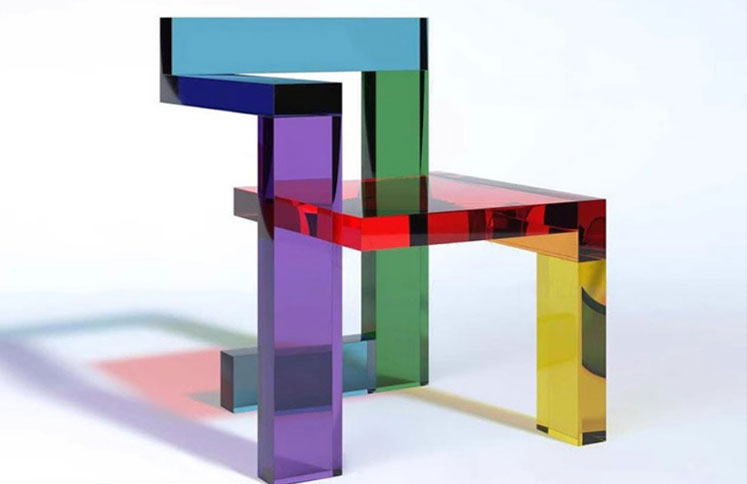
Branding and Personalization
We apply laser engraving, screen printing, UV printing, serial numbers, care labels, compliance labels, barcodes, SKU marks, and private-label packaging.
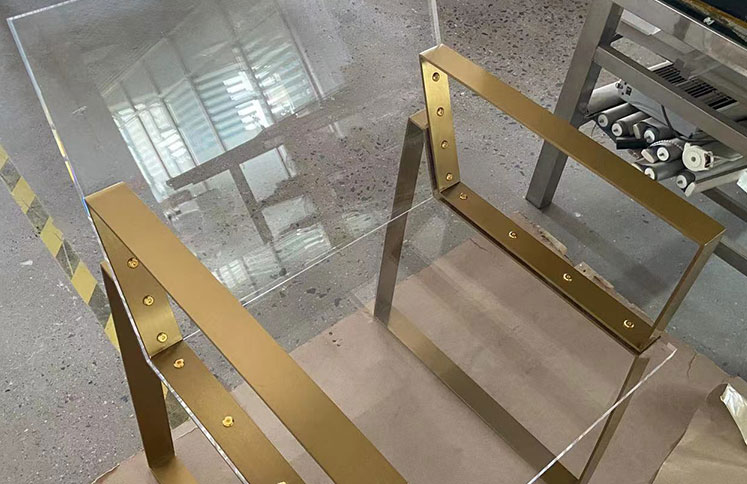
Hardware and Assembly
The approved BOM records inserts, brackets, fasteners, glides, casters, footrests, upholstery attachments, tools, spare parts, torque notes, and assembly instructions.
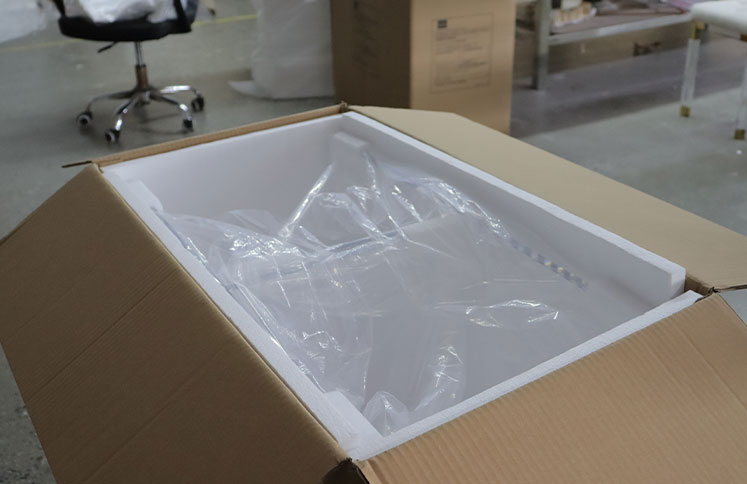
Packaging and Presentation
Choose assembled, knock-down, nested, or stack-protected packing with surface separators, hardware bags, retail cartons, project labels, pallet plans, and replacement-part identification.
Built for Commercial Launches
Approve Comfort with a Finished Chair Sample
A chair drawing does not prove comfort. We build the sample around the intended table or counter, seat height and depth, back angle, front-edge pressure, arm clearance, and sitting period. Buyers test the finished chair with different users and record the approved geometry before bulk production. This catches an uncomfortable posture or table conflict while the design can still be corrected, reducing returns, negative reviews, and project rejection.
Test the Complete Chair, Not Only the Acrylic
Chair performance depends on the full construction: seat, back, legs, joints, fasteners, arms, footrest, glides, and upholstery attachment. The approval plan records static, repeated, off-center, stability, and joint checks for the exact model. ISO 7173 covers structural strength and durability tests for chairs and stools, while ANSI/BIFMA X5.4 covers public, lounge, restaurant, dining, and cafeteria seating. The chosen evidence must match the market and use claim.
Control Freight, Surface Contact, and Replacements
Chair programs lose margin through bulky cartons, scratched surfaces, mixed hardware, and replacement units that no longer match. We review assembled, knock-down, nested, or stack-protected packing with actual chair dimensions and the distribution route. Each version receives a controlled drawing, material and color reference, upholstery and hardware codes, carton label, and retained sample. The same records guide production, receiving, replenishment, and future replacement orders.
Manufacturing Process
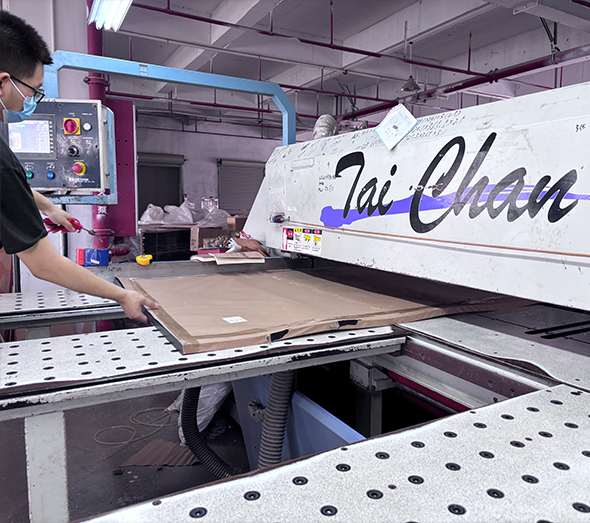
Electronic Saw Cutting
The electronic saw cuts chair panels, legs, supports, reinforcing plates, templates, and packing parts to the released drawing while preserving protective film and part identification.
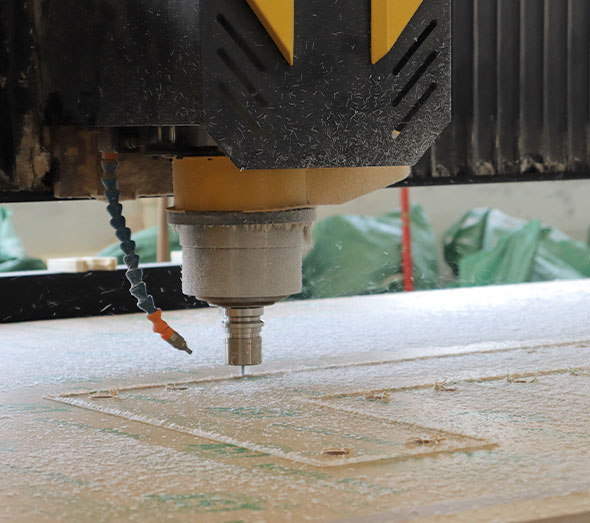
Cutting and CNC Machining
CNC machining produces seat and back profiles, holes, slots, pockets, inserts, hardware interfaces, upholstery locations, and repeatable joint surfaces.
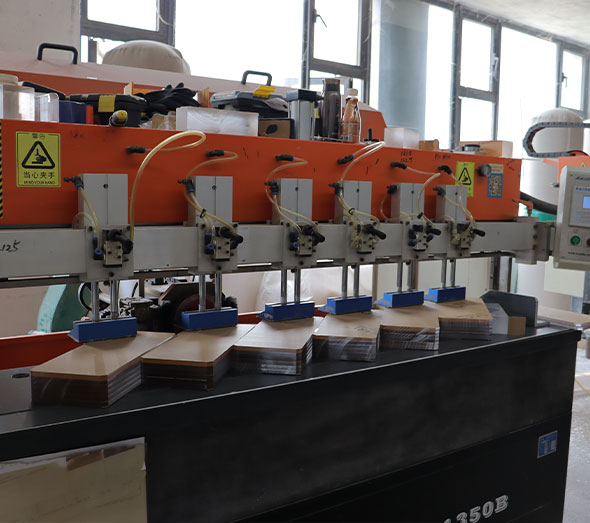
Edge Polishing and Forming
Grinding and diamond polishing remove tool marks and prepare visible seat, back, arm, leg, and joint edges before forming or assembly.
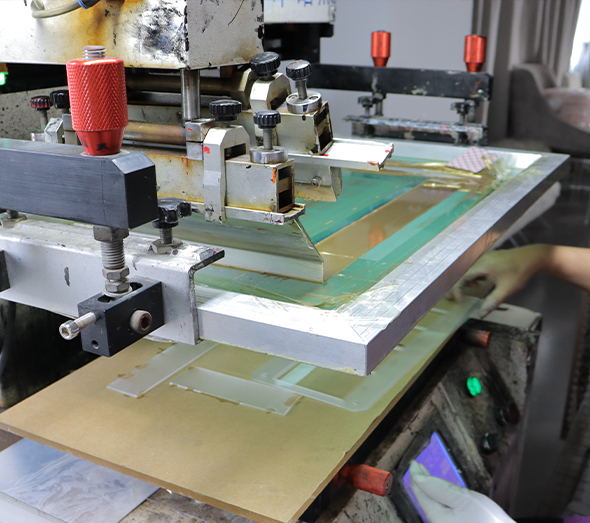
Printing and Engraving
Screen printing, UV printing, laser engraving, serial marking, and care labels follow the approved artwork, position, color, reading direction, and SKU.
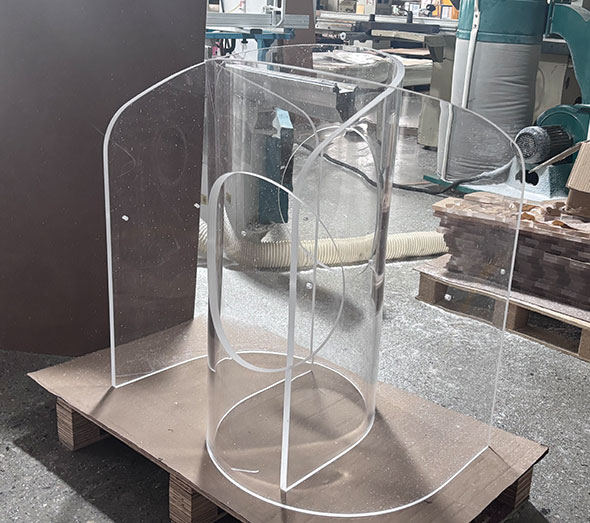
Hot bending
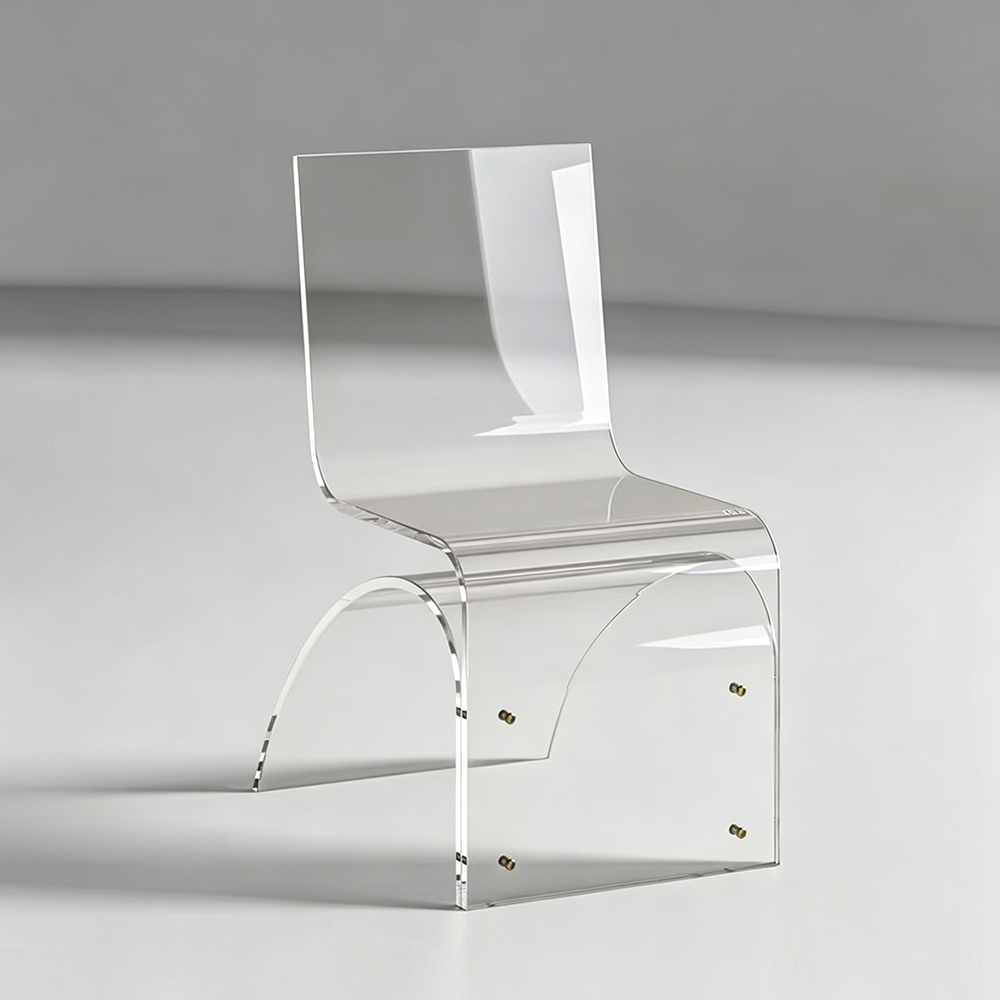
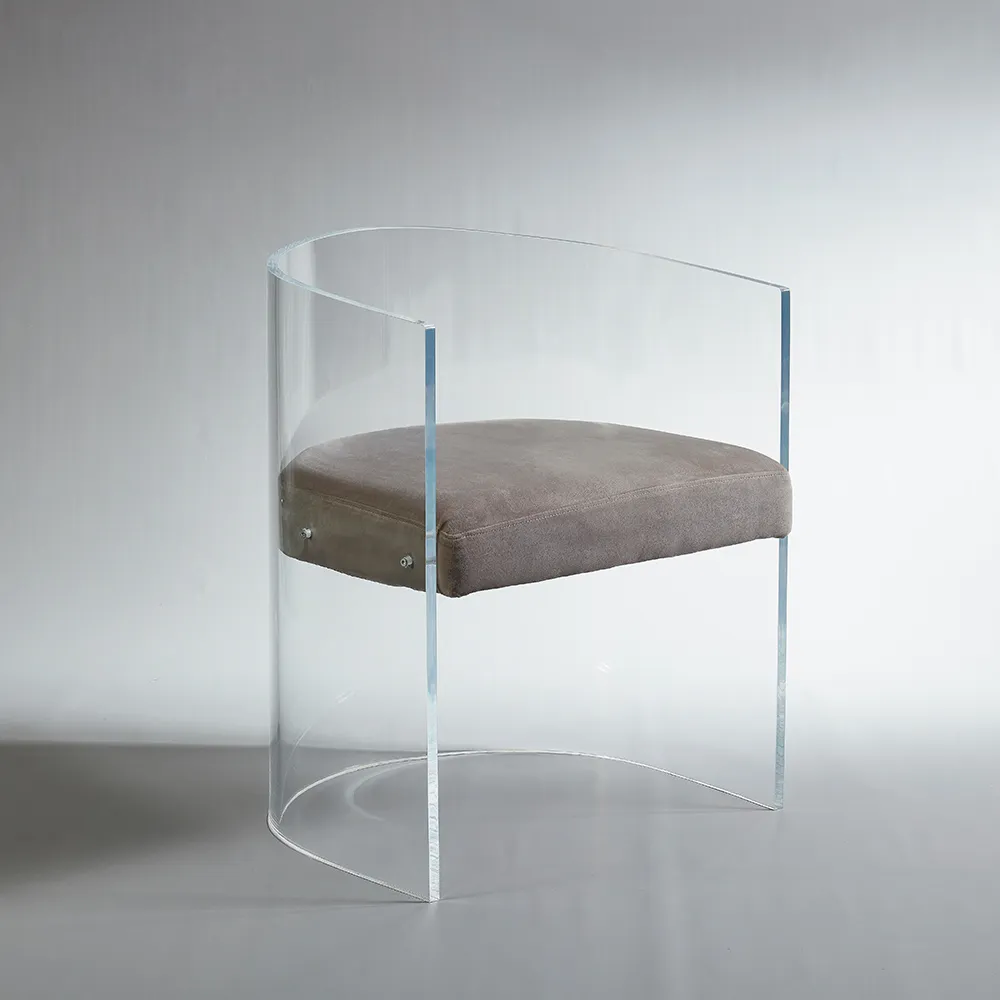
JFM forms curved acrylic with controlled heating and tooling, then checks bend direction, radius, return length, and floor contact against the drawing.
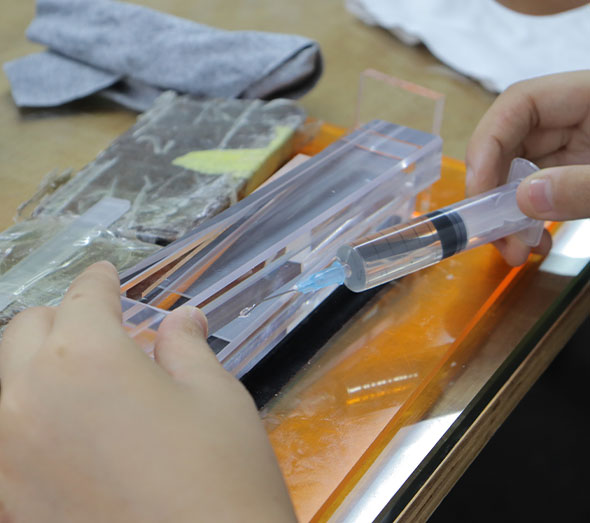
Bonding
Assembly fixtures hold legs, seats, backs, arms, reinforcements, and mixed-material interfaces in position while the approved bonding process sets.
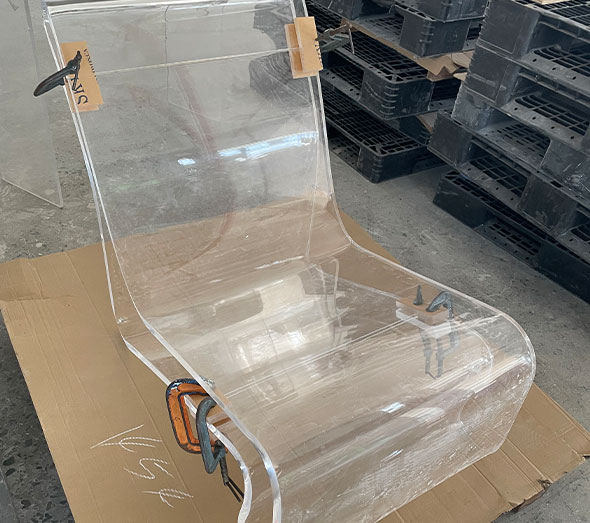
Quality Inspection
We check dimensions, seat geometry, stability, surfaces, edges, bends, joints, hardware, upholstery, SKU identity, and the approved chair test record.
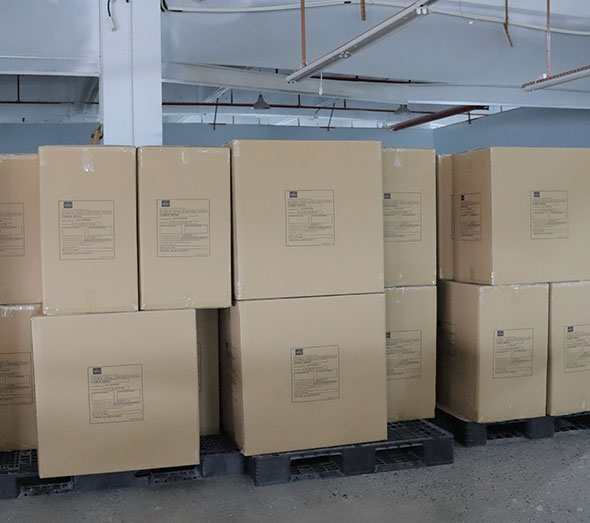
Protective Packing
We retain protective film and add separators, edge protection, hardware bags, labels, cartons, wooden cases, or pallets from the chair packing specification.
Completed Customer Project Cases
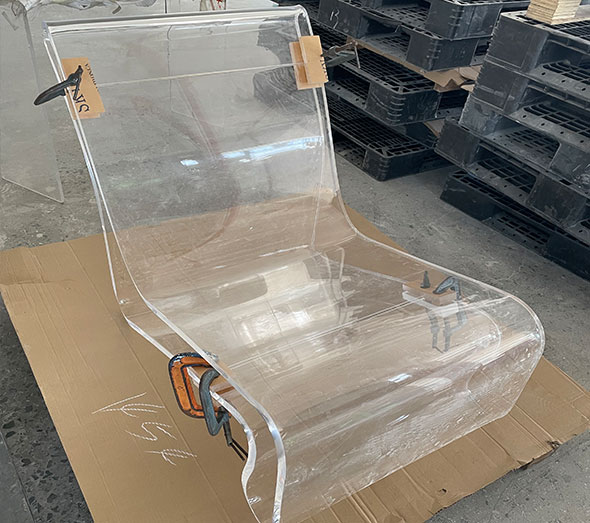
United Kingdom Furniture Brand — September 2024 — One-Piece Z Chair
Project: In September 2024, a furniture brand in the United Kingdom ordered a one-piece clear acrylic chair measuring 16 × 22 × 35 in, with an 18 in seat height and 1 in material thickness. Challenge: the two hot bends had to produce the same seat angle and back position without leaving the acrylic chair rocking on a flat floor. Solution: JFM formed both bends in one matched jig, set the inside bend radius to 40 mm, and checked seat height to ±2 mm after cooling. Result: the approved acrylic chair kept the front and rear contact edges on one plane with less than 1 mm gap, while the finished width remained within ±1.5 mm.
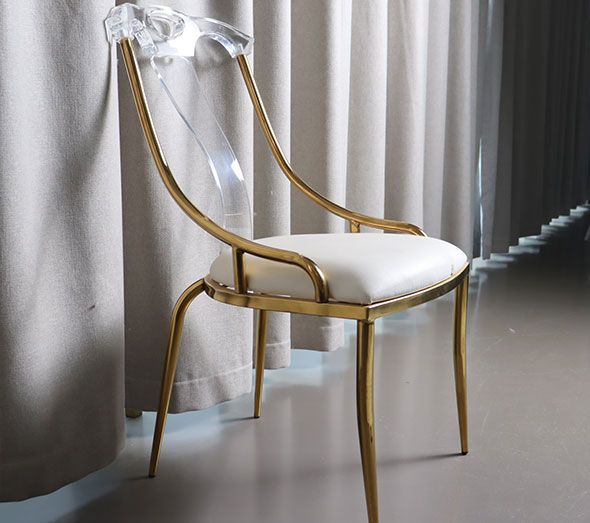
Canadian Hospitality Furniture Buyer — May 2025 — Metal-Base Dining Chair
Project: In May 2025, a Canadian hospitality furniture buyer ordered an acrylic dining chair measuring 450 × 500 × 900 mm with a 450 mm seat height, an 8 mm formed shell, and a powder-coated metal base. Challenge: four mounting points in the acrylic chair shell had to match bases produced on a separate line, and a small offset caused the shell to pull sideways during assembly. Solution: JFM used four Ø6.6 mm clearance holes for M6 bolts on a 260 × 280 mm pattern, held each hole center to ±0.5 mm, and trial-assembled the shell with production hardware. Result: every approved acrylic chair shell fitted the common base gauge, and the seat remained centered within 1 mm after tightening.
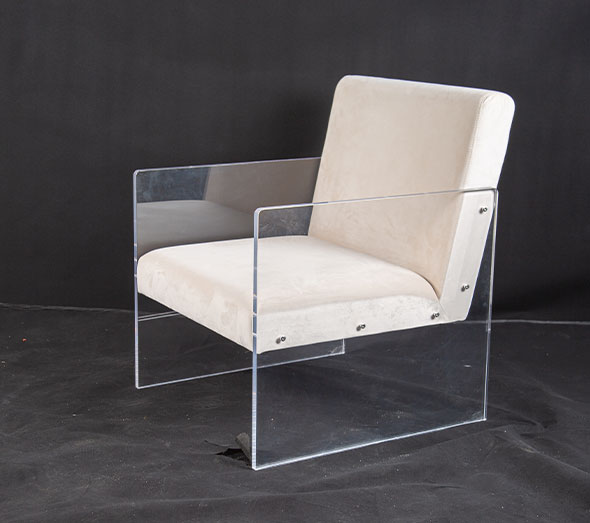
United States Interior Project Buyer — January 2026 — Knock-Down Armchair
Project: In January 2026, an interior project buyer in the United States ordered a knock-down acrylic armchair measuring 560 × 560 × 820 mm with a 460 mm seat height and 10 mm clear side panels. Challenge: the two sides, seat, back, and hardware had to fit one carton, but the assembled acrylic chair still had to remain square. Solution: JFM used eight M8 connector bolts through Ø9 mm clearance holes, added 25 mm stainless load-spreading washers, and numbered every joint to match the assembly sheet. Result: the approved acrylic chair assembled with a diagonal difference below 3 mm, all eight bolts entered without forcing the panels, and the replacement hardware pack matched the same joint map.
Bulk Production Process
1. Inquiry & Quotation
Consult customer service to confirm product specifications, craftsmanship, and quantity, then finalize the quotation and lead time.
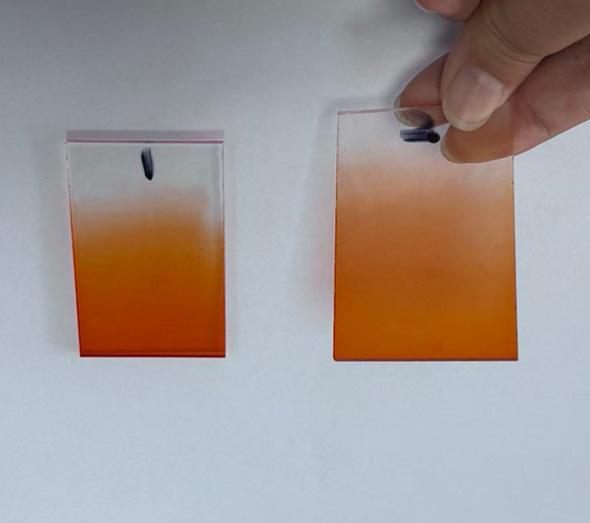
2. Solution Confirmation
Formulate the solution, design the drawings, and confirm the final version.
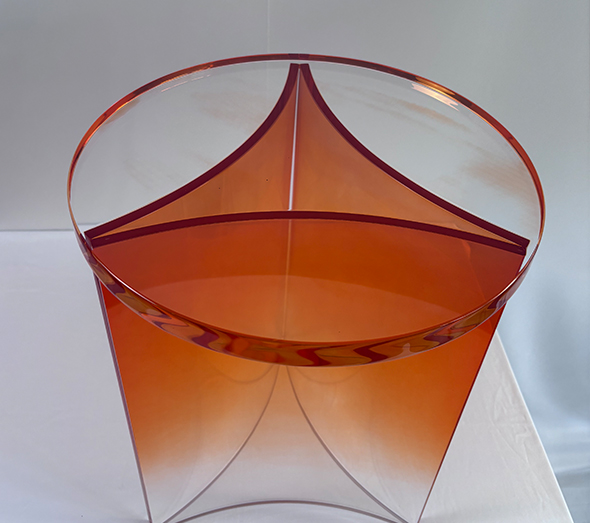
3. Sample Production
The factory designs and produces samples, then sends them to the buyer for confirmation.
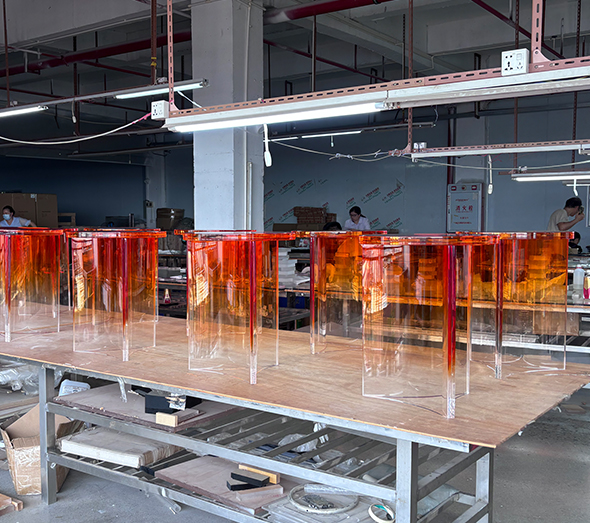
4. Mass Production
The factory starts mass production in accordance with the confirmed samples. No modifications are allowed during production.
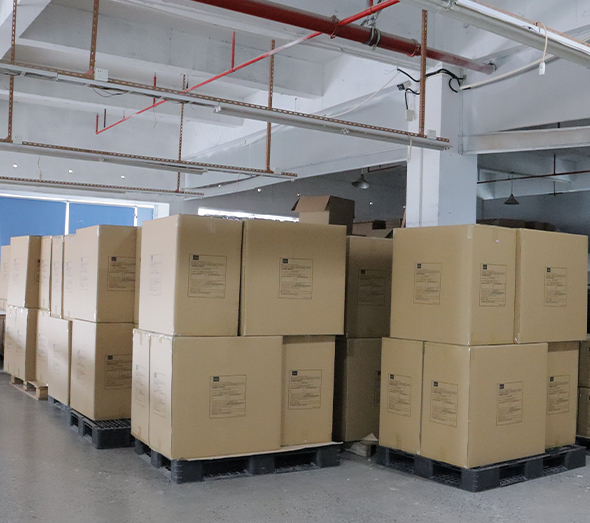
5.Products Shipment
Once production is completed, safe shipment will be arranged after the balance payment is settled.
Packing Facts
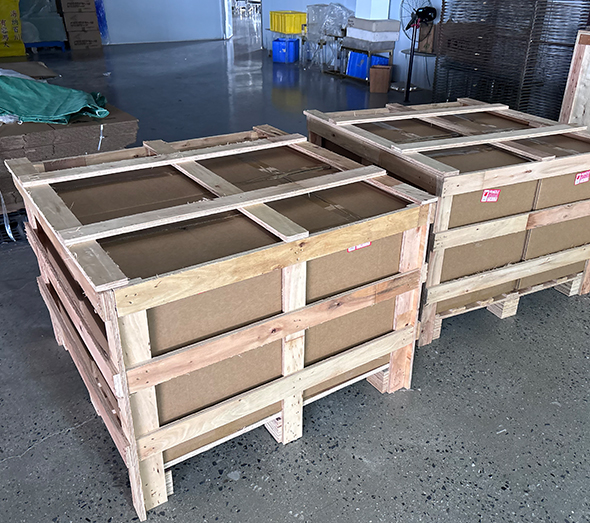
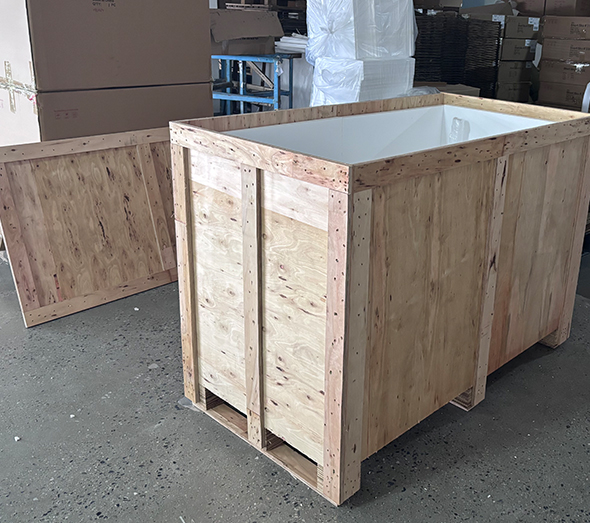
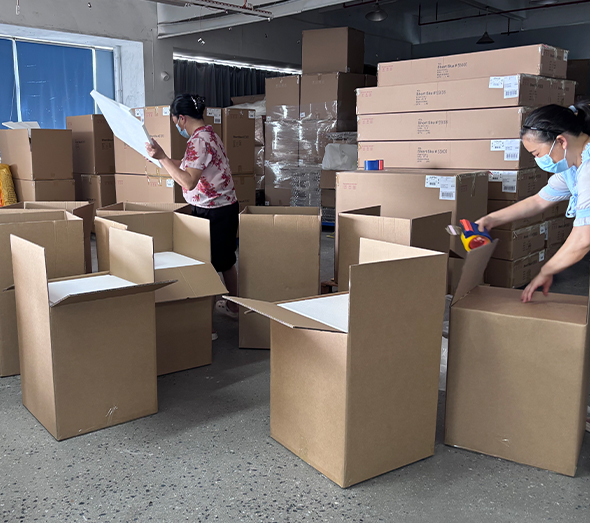
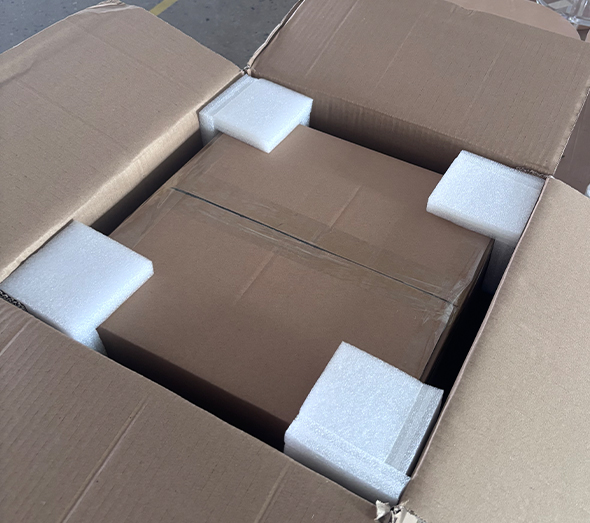
Packaging materials
Outer packaging materials:Corrugated Boxes, Honeycomb Boards, Custom Gift Boxes, Wooden box; Cushioning materials:cushioning materials, Air Pillows, EPE, Honeycomb Paper, Kraft Paper Fillers; Sealing and securing materials:BOPP Transparent Tape, Kraft paper tape, Custom Printed Tape, Stretch Film; Special protective materials:Desiccant, Anti-Static Bags……
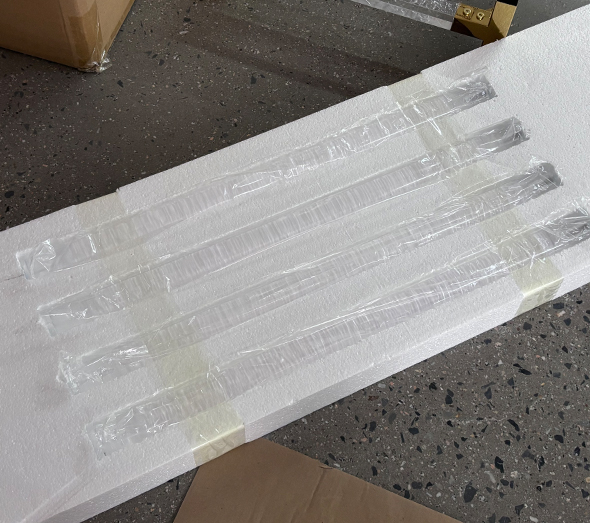
Surface and Edge Protection
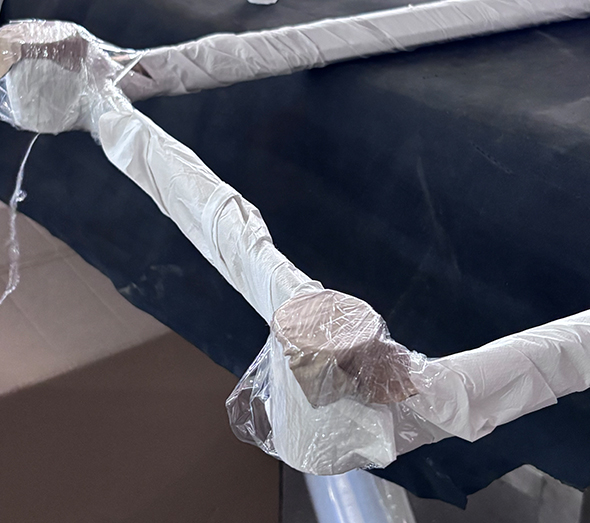
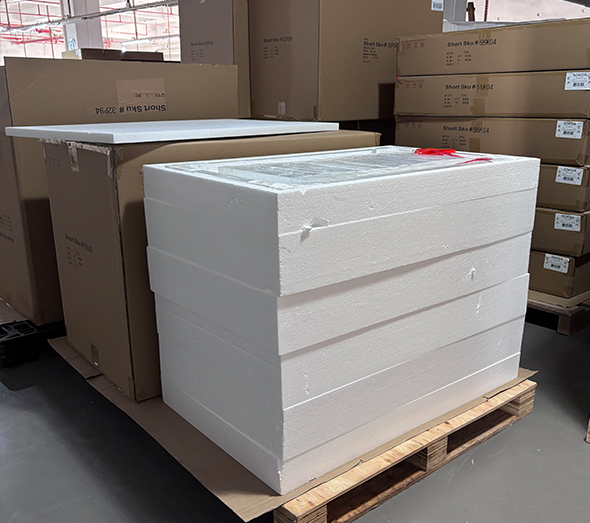
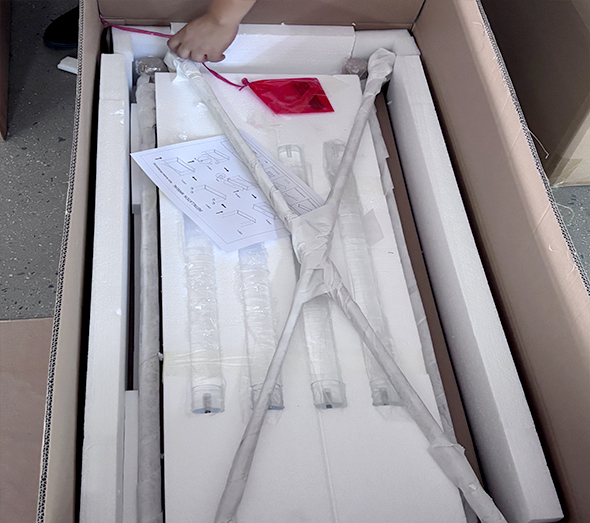
A published acrylic-furniture pack uses PE film or bag, pearl-cotton or bubble separation, foam board, wooden case, and pallet to stop surface contact.
Sets and Carton Identification
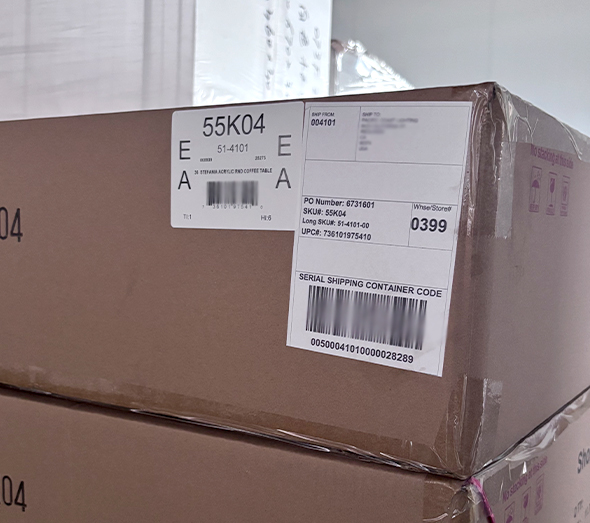
Nesting sizes remain separate SKUs. Carton labels list each size, color, pieces per set, quantity, destination, store, room, or project zone.
FAQ
Do not approve the product from its marketplace name or appearance alone. Ask your supplier to identify the base material, forming process, structure, and supporting documentation for the exact chair. Then compare those facts with your intended use, required testing, repair expectations, and target price. This prevents you from comparing a fabricated PMMA or Lucite chair with an injection-molded polycarbonate event chair as if they were equivalent, and helps you select a supplier whose process matches your product strategy.
Test the finished chair with the users and table conditions your customer will encounter. Check seat height and depth, back angle, front-edge pressure, arm clearance, posture, and ease of sitting down and standing up. Include different body sizes and realistic sitting periods, not a brief showroom trial. Record the approved dimensions and feedback before production. A visually striking chair that photographs well but feels uncomfortable can create returns, poor reviews, and rejection by designers or hospitality operators.
Define the actual duty cycle before asking whether the chair is durable. Tell your supplier where it will be used, how often it will be moved, the expected user range, flooring, cleaning routine, and standards required in your market. Evaluate stability, joints, fasteners, edges, feet, repeated seating, and off-center use on the final construction. Base any commercial claim on evidence for that exact model, so your sales promise and project liability do not exceed what you have verified.
Choose arms when they improve comfort, positioning, or the visual role of the chair, but check the operational cost. Measure table clearance, aisle width, room density, user transfer space, and whether arms interfere with stacking or storage. An armless version may fit more places and simplify your assortment, while an armchair can support a more premium or lounge-oriented offer. Test both in your actual floor plan before committing to a collection or multi-site rollout.
Map where the chair is touched, stacked, moved, and cleaned before you define the care plan. Test contact between chair surfaces, floors, tables, carts, and cleaning tools, then specify compatible cleaners and soft cloths for staff or customers. Use an approved sample to set realistic appearance criteria after handling. This helps you distinguish preventable damage from normal wear, improve instructions, and reduce complaints caused by marketing a clear surface as permanently scratch-free.
Give the chair a clear job in your assortment instead of buying it because transparent furniture is trending. Decide whether it solves a space, styling, dining, vanity, or project need that your existing range does not cover. Launch a controlled number of variants, then review sell-through, returns, damage, margin, and reorder demand by SKU. You can expand proven shapes or finishes while limiting trend-led versions that consume warehouse space without strengthening your brand.
Verify the real material and stack design before treating a clear chair as rental inventory. Test how many chairs can be stacked safely, whether contact points cause abrasion, how staff lift and move the stack, and whether the chair survives repeated setup, transport, cleaning, and uneven venue floors. Include carts, cushions, and protective separators in the trial. Calculate labor, storage density, repair, and retirement costs—not only purchase price—before deciding whether the model fits your rental economics.
Keep each approved chair tied to a controlled drawing, material specification, color or transparency reference, upholstery and hardware codes, and a signed production sample. Require written approval before any supplier or component substitution. When replenishing, compare new units with retained stock under the lighting in which customers will see them. This protects your series from visible batch differences and prevents replacement chairs from becoming incompatible with matching tables, cushions, or earlier project installations.
Request a Quote for Your Side Table Project
Product Specification
Send your company details, drawing or reference, dimensions, color, intended use, quantity for each design, and destination. For acrylic nesting side tables, include the number of sets and pieces per set.
Destination and Timing
Add the preferred packing method, target arrival date, and whether the order is for wholesale, private label, or an interior project.
Commercial Context
We can then review the sample and bulk quotation on the right basis.