
Clear Acrylic Coffee Table
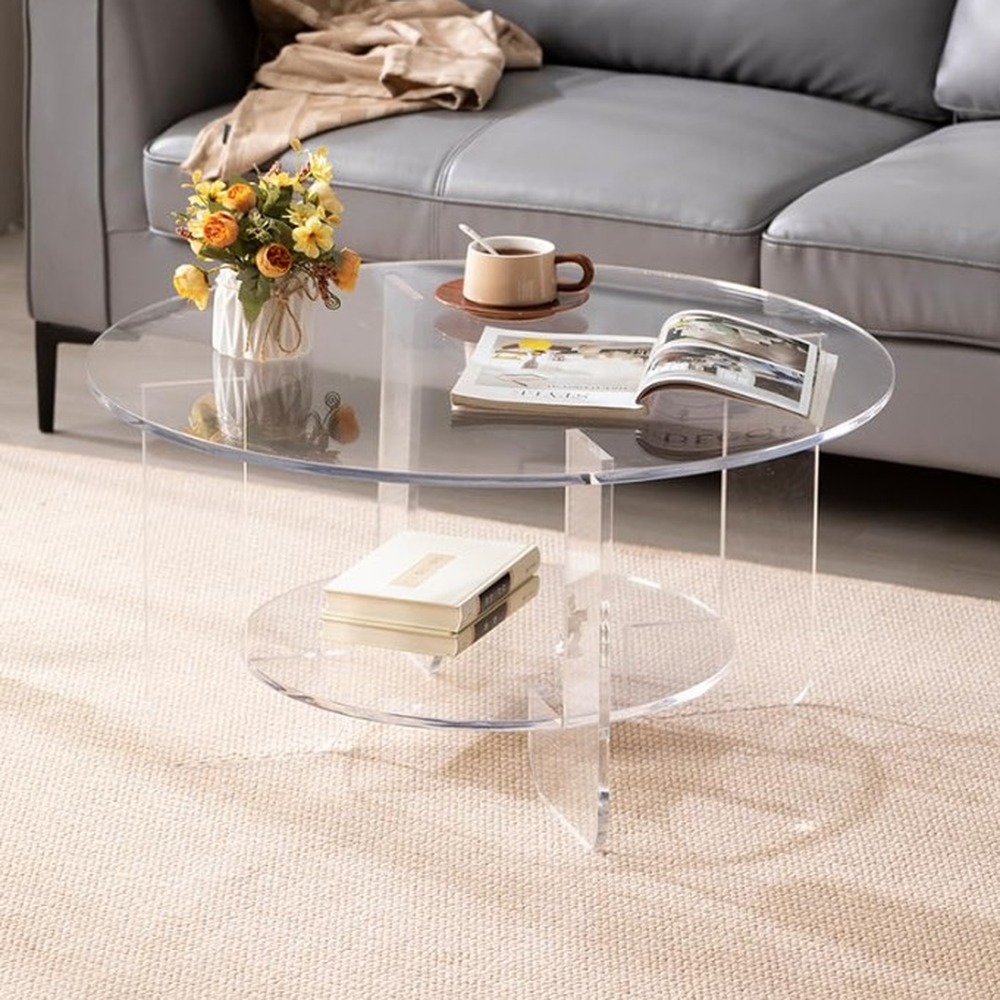
JFM manufactures custom clear acrylic coffee tables for importers, wholesalers, distributors, and furniture brands, with consistent clear appearance, dependable production schedules, and competitive factory pricing.






Quick specifications
| Product Scope | Complete custom clear acrylic coffee tables across six approved product categories, with project-defined shape, dimensions, clear appearance, construction, mixed-material parts, assembly state, branding, and packing. |
|---|---|
| MOQ | 50–200-piece MOQs |
| Sample Timing | JFM offers 3–7-day sample production. |
| Production Lead Time | We publish 10–35-day bulk production schedules. The exact time will depend on the order quantity and the complexity of the product. |
| Size, Thickness and Load | We provide 5–100 mm acrylic processing for furniture. |
| Material and Finish | 92% light-transmission cast acrylic, available in clear, smoked grey, tea, milky white, gradient, frosted, and custom-tinted finishes. |
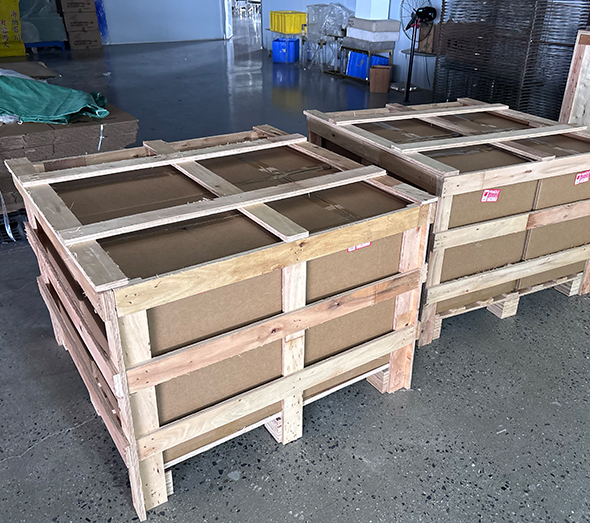
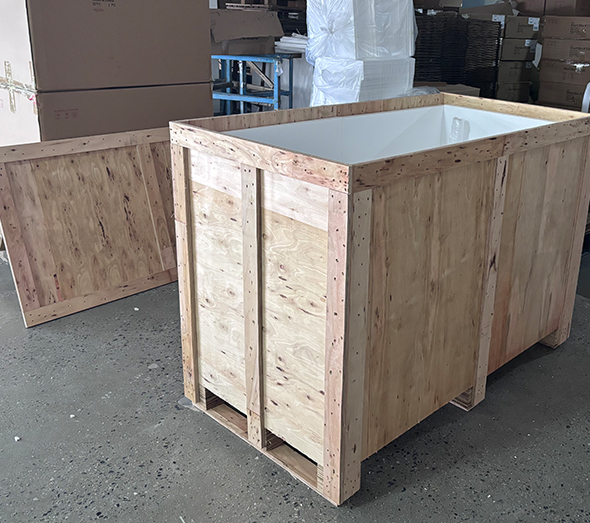
| Assembly and Packing | Furniture packs use a PE bag, foam separation, foam board, wooden case, and pallet. JFM records the assembly state and carton plan by SKU. |
| Shipping Terms | We supply protective packing and arrange EXW, FOB, DDU, or DDP delivery. The confirmed quotation and order record the shipping term, destination, packing scope, and planned dispatch schedule. |
Clear Appearance Controlled as a Production Specification
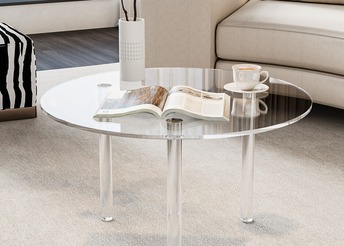

JFM manufactures clear acrylic coffee tables for importers, wholesalers, distributors, and furniture brands that need repeatable finished products rather than loose acrylic parts. Each clear acrylic coffee table is released with its shape, overall and component dimensions, material, visible faces, edge profile, joint or bend route, mixed-material responsibility, hardware, assembly state, and packing requirement. Your physical sample establishes the approved clear tone, acceptable tint or haze appearance, visible-edge standard, joint locations, surface condition, and component fit. We use the same references for first-piece, in-process, finished-goods, and repeat-order checks. This gives your purchasing team one comparable scope for quotation, quality review, receiving, and replenishment.
Explore our custom acrylic coffee tables for additional shapes and specifications. For a circular silhouette, see our round acrylic coffee table.
Our Products
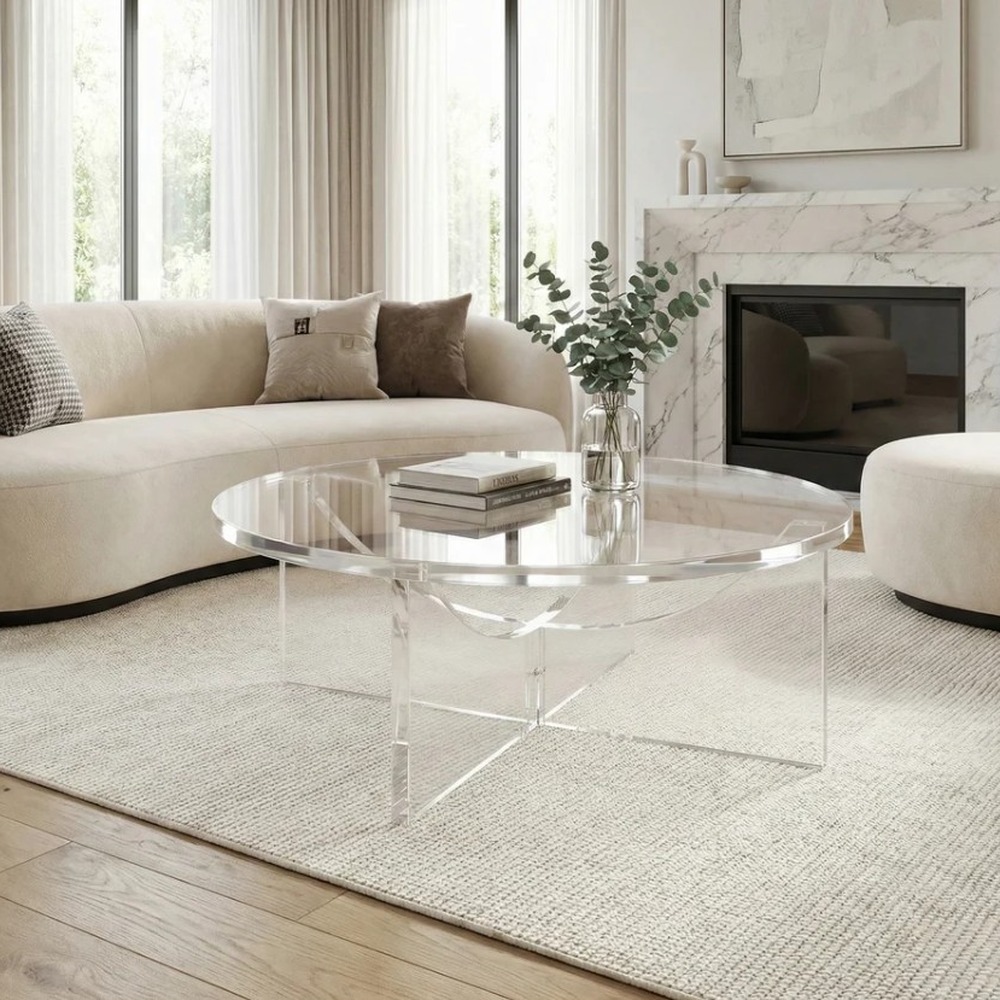
Clear Round Acrylic Coffee Tables
Specify the finished diameter, height, edge profile, base or leg structure, material responsibility, assembly state, visible-surface standard, and carton format for your channel.

Clear Square Acrylic Coffee Tables
Release the side length, corner treatment, support structure, joint or hardware interfaces, surface reference, labels, assembly method, and protective pack as one finished model.
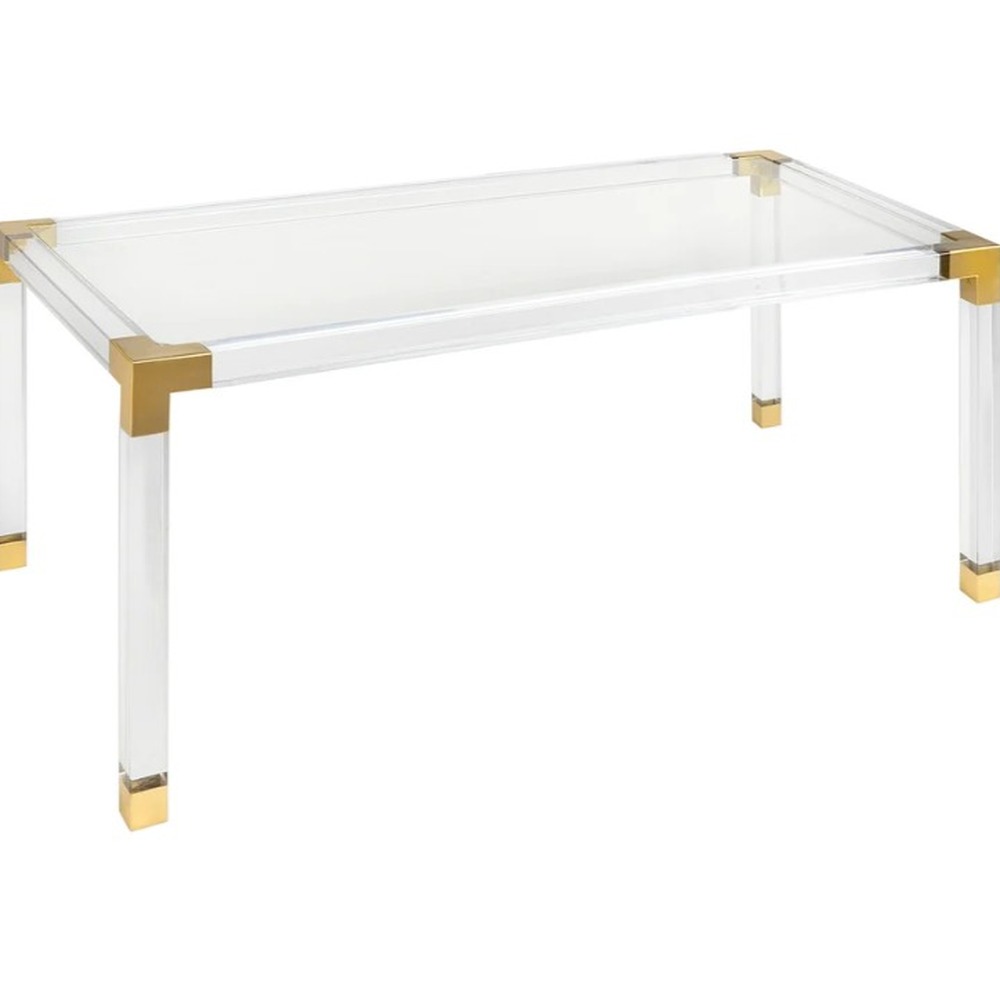
Clear Rectangular Acrylic Coffee Tables
Define length, width, height, edge details, leg or panel construction, mixed materials, connection points, assembly state, and packing limits before sample approval.
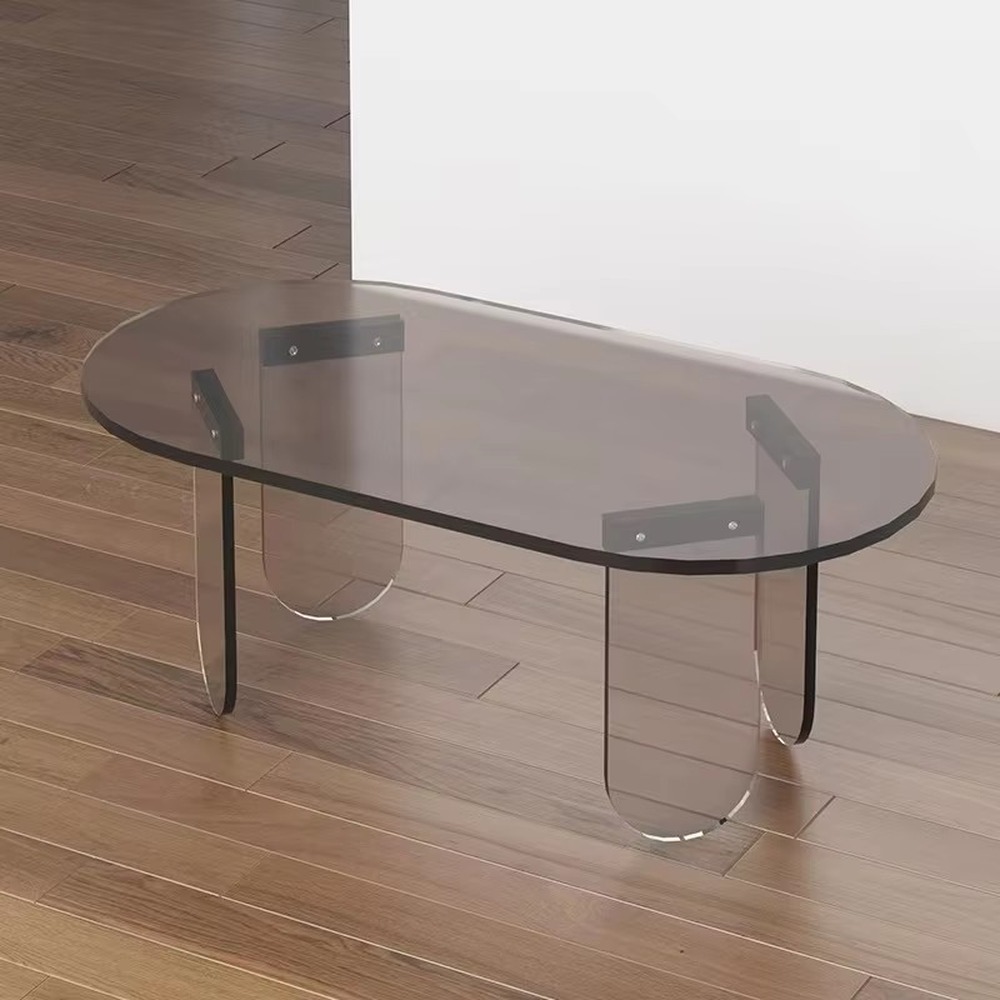
Clear Oval Acrylic Coffee Tables
Approve the oval profile, long and short axes, edge finish, supporting structure, surface reference, component alignment, and carton orientation from the released drawing and sample.

Clear Waterfall Acrylic Coffee Tables
Use this category only for a genuine continuous formed profile. Confirm overall size, bend angle and radius, top-to-side relationship, visible edges, surface condition, and finished pack.
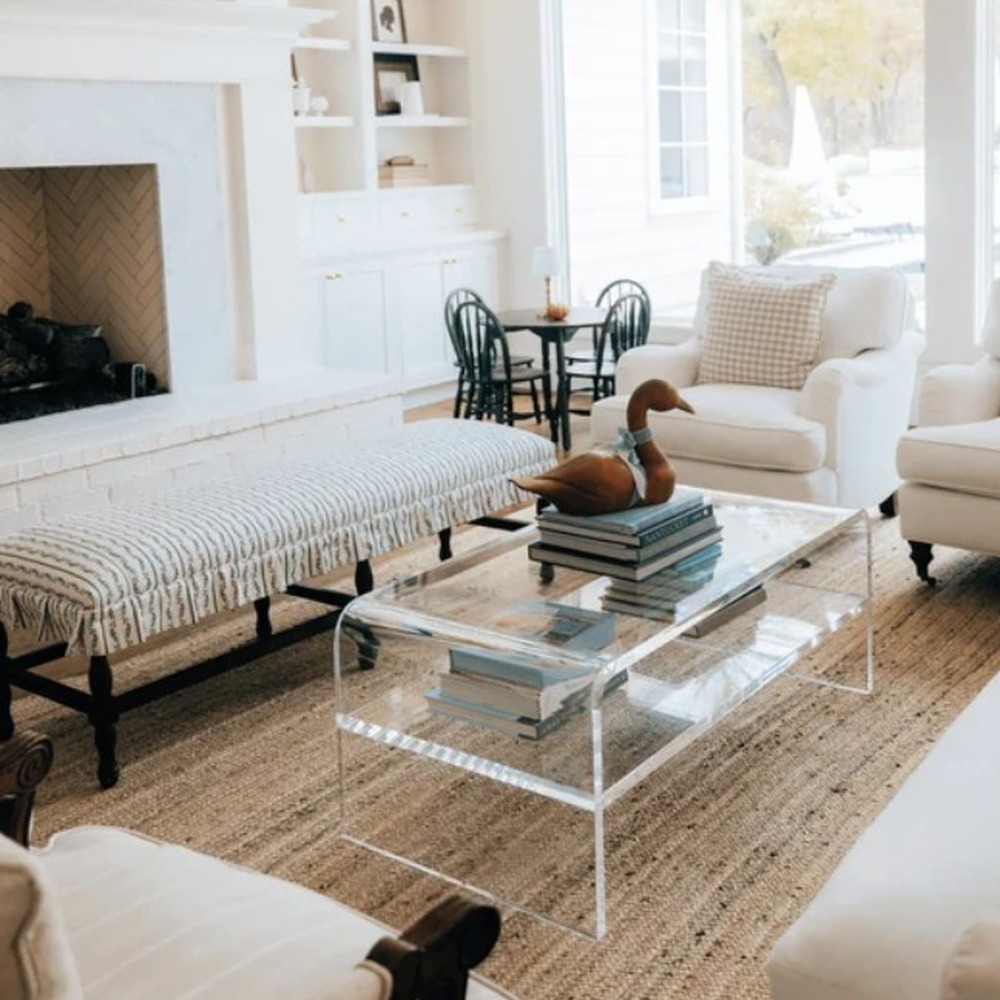
Clear Acrylic Coffee Tables with Storage
Storage models record the top, shelf or compartment, spacing, holes, hardware, bonding or assembly route, component protection, and Fully Assembled or KD delivery state.
Customization Range
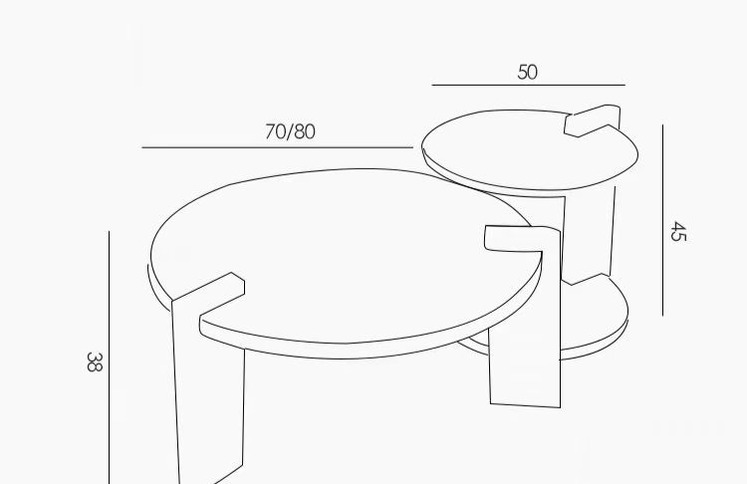
Coffee Table Size and Overall Size
Provide overall length, width and height, the controlling shape dimensions, top and shelf sizes, support positions, corner profile, and the drawing view for every measurement.

Acrylic Material Type
Identify the acrylic grade, thickness, clear appearance reference, finish, and visible faces. Name glass, metal, wood, feet, frames, and other materials separately by component.

Coffee Table Structure and Use
Choose a continuous hot-bent, bonded-panel, leg-and-frame, two-tier, storage, or mechanically fastened construction that matches the complete product and intended sales channel.
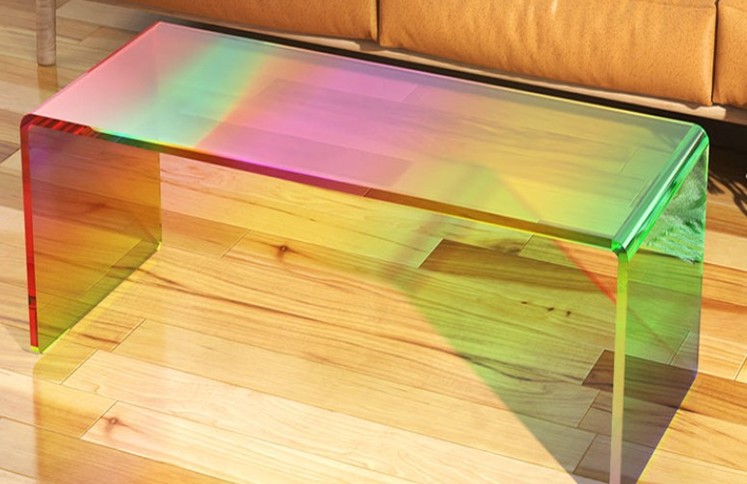
Surface Treatment
Approve the clear tone, acceptable tint or haze appearance, visible-surface reference, film-removal point, printed or engraved details, and any finish applied to mixed-material parts.

Edge and Corner Finish
Release polished, eased, rounded, chamfered, or formed edges by location. Distinguish buyer-facing edges, hidden interfaces, holes, cutouts, shelf edges, and corners on the drawing.

Branding and Personalization
Provide logo artwork, engraving or print method, item code, barcode, label language, reading direction, position, color reference, and the proof required for approval.

Hardware and Assembly
List inserts, bolts, washers, brackets, feet, frames, tools, spare parts, and supplier responsibility. Confirm Fully Assembled, KD, or separated components during sampling.

Packaging and Presentation
Choose the assembly state, surface separators, restrained hardware zone, instructions, carton labels, retail or neutral presentation, carton limits, destination, and customer acceptance requirement.
Feature Box
Consistent Clear Appearance from Sample to Bulk
A released drawing and approved clear acrylic coffee table sample establish clear tone, acceptable tint or haze, overall and component dimensions, visible edges, bend or joint locations, holes, hardware contact, surface condition, assembly fit, labels, and packing state. First-piece, in-process, and final checks use the same reference. This gives purchasing and quality teams a practical basis for checking bulk and repeat orders instead of relying on a general promise of clarity.
Reliable Production and Delivery Planning
We build the clear acrylic coffee table production plan after the drawing, approved sample, material and appearance reference, structure, mixed-material parts, hardware, quantities, assembly state, and packing are confirmed. Material preparation, cutting, forming or bonding, incoming components, first-piece review, batch inspection, packing approval, and dispatch preparation have defined checkpoints. The quotation and order record the production window and change cut-off, helping your team coordinate approvals, purchasing, launches, and replenishment.
Competitive Factory Pricing
Factory-direct supply removes intermediary markups. Before quoting, we compare material thickness, forming, bonding, hardware, assembly, and packing routes to remove unnecessary operations while retaining the approved finished standard. Where the design permits, we also compare Fully Assembled and KD packing. Pricing then reflects quantity, model split, component responsibility, assembly state, carton volume, branding, and order grouping for a like-for-like supplier and landed-cost comparison.
Manufacturing Process
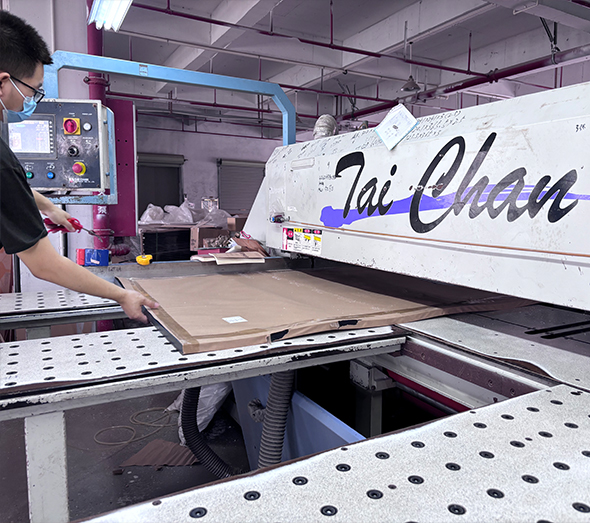
Electronic Saw Cutting
Top, side, shelf, support, leg, fixture, and packing parts are identified from the released file before cutting. Protective film and part identity remain controlled for later processing.
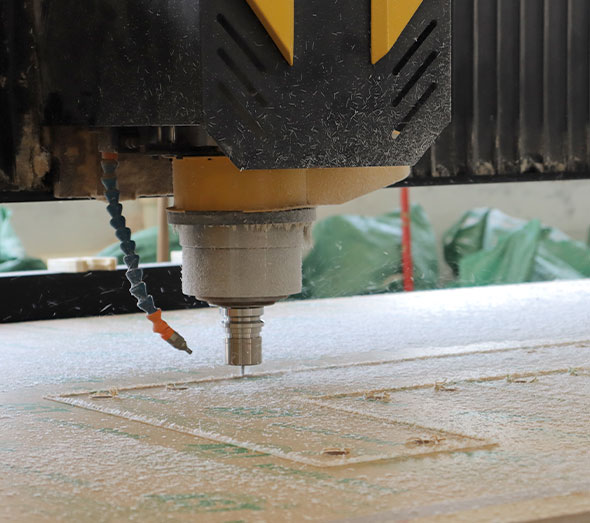
Cutting and CNC Machining
Profiles, holes, slots, insert locations, hardware interfaces, artwork references, and assembly surfaces follow the approved drawing. Related parts retain their model and revision identity.
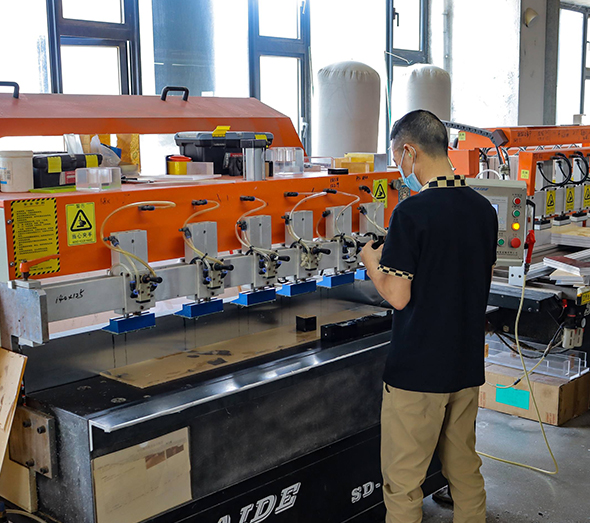
Edge Polishing and Forming
Visible top, side, shelf, leg, cutout, and hole edges receive the specified machining, polishing, or forming route. Operators check the released profile before the next process.
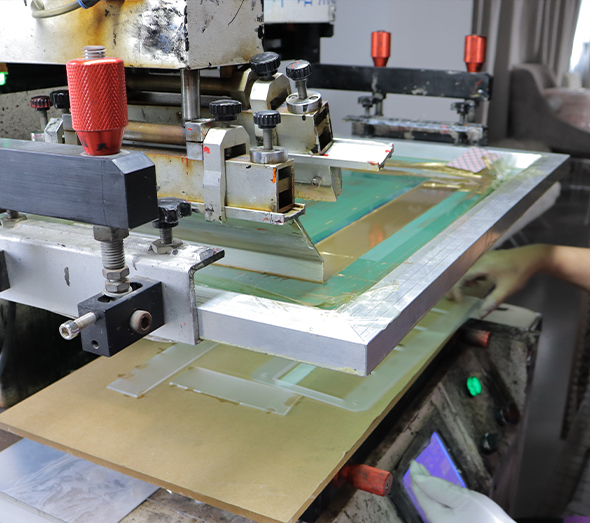
Printing and Engraving
Logos, item codes, assembly marks, serial references, and labels follow the approved artwork, color, position, reading direction, and product revision while protected surfaces remain covered.
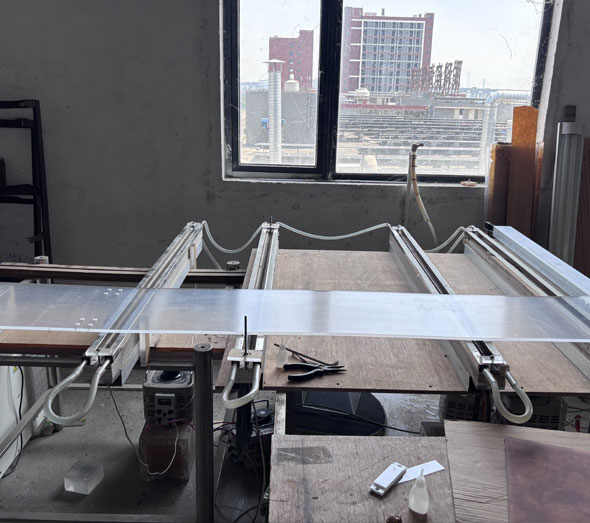
Hot bending
When a clear acrylic coffee table uses a genuine formed structure, the acrylic is heated evenly to the forming condition, placed in a dedicated fixture for the approved angle and radius, and held in that fixture while cooling. We then check the overall shape, angle or radius, top-to-side relationship, parallel or symmetrical faces where applicable, clear surface condition, and fit with shelves, feet, frames, or hardware.
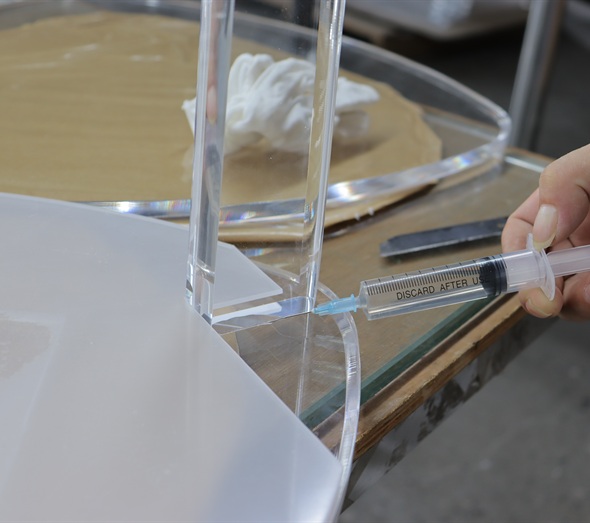
Bonding
Prepared parts are held in the defined fixture during bonding. We control application and handling, then check alignment, visible joint position, surrounding surfaces, finished geometry, and connected-component fit.
Quality Inspection
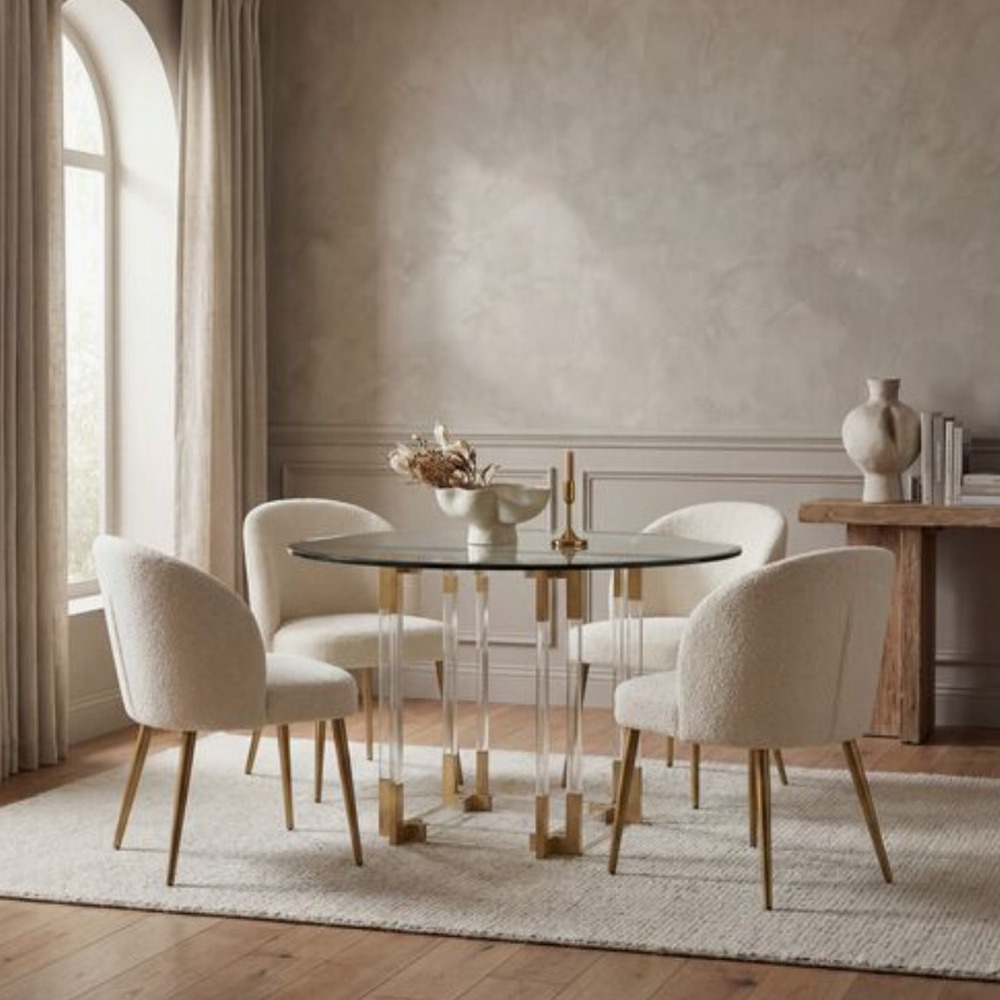
Inspection compares overall dimensions, profiles, formed or bonded geometry, clear appearance reference, visible surfaces, edges, holes, mixed-material parts, hardware completeness, assembly fit, labels, and packing state.
Protective Packing
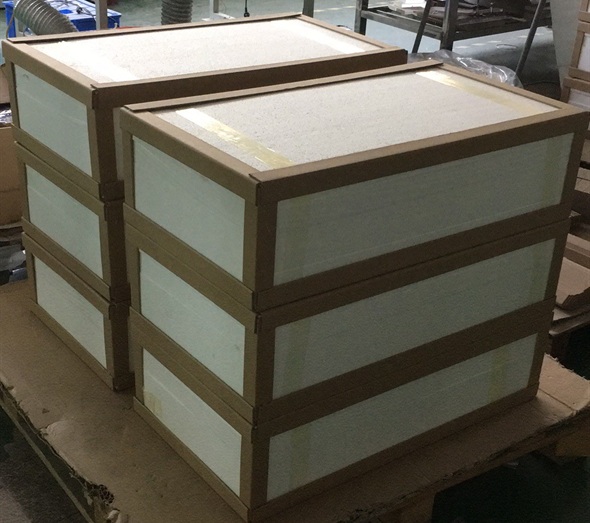
Visible acrylic stays separated from hardware, tools, and dissimilar components. Operators verify film, separators, edge protection, restrained accessories, instructions, carton identity, component count, and destination marks.
Application

Clear Waterfall Profile Held to the Approved Sample — United States, March 2024
Project: A United States private-label furniture brand ordered one-piece clear acrylic coffee tables in March 2024. Each measured 900 × 500 × 400 mm and used 15 mm acrylic.
Client’s Concern: Uneven bends, edges, or clear tone would make tables from one order look different side by side. The brand could face rejected pieces or extra sorting before sale.
Solution: We used an approved appearance sample, formed the two sides in one fixture, cooled each piece in place, and checked the bend, height, top level, edges, and visible surfaces before packing.
Result: The checked tables followed the released bend and appearance reference. The brand had one defined finished-table standard for reviewing the bulk order and later replenishment.

Storage Hardware and Clear Surfaces Packed as Separate Risks — United States, April 2025
Project: A United States furniture importer ordered two-tier clear acrylic coffee tables with a lower shelf in April 2025.
Client’s Concern: Misplaced shelf holes could prevent assembly, while loose fasteners could scratch visible acrylic in transit. Either problem would make the table harder to sell and require replacement work.
Solution: We fixed four shelf connections, used washers at acrylic contact points, assembled the production components, and restrained the hardware away from visible faces in its own packing compartment.
Result: The checked shelf and fasteners fitted the approved assembly. The identified parts and separated hardware were packed with the table, addressing the fit and surface-contact risks the importer raised.
Repeat-Order References Preserved a Multi-Model Clear Range — United Kingdom, May 2025
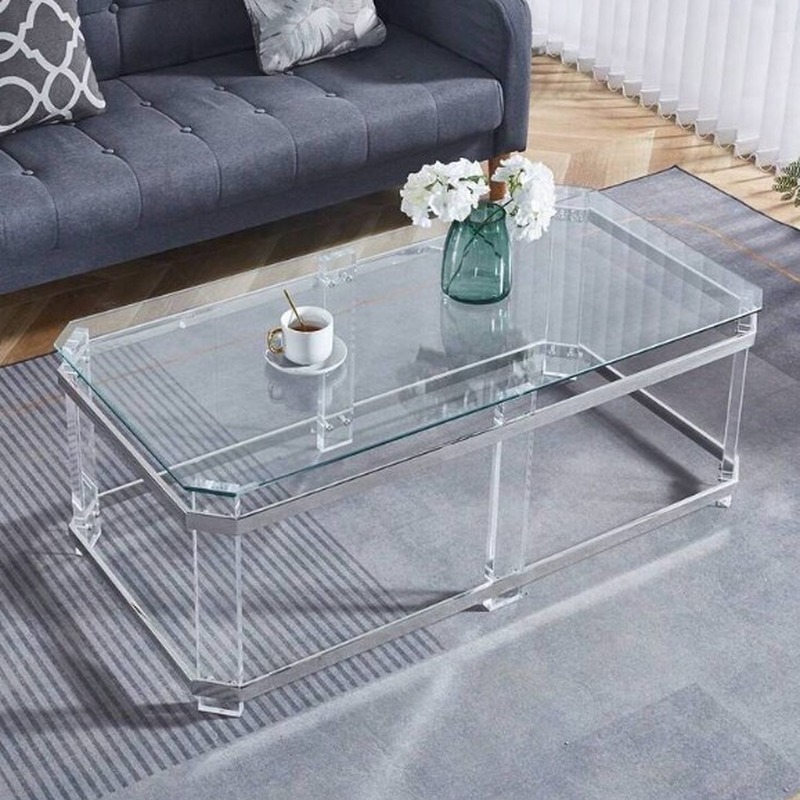
Project: A United Kingdom wholesaler reordered two clear acrylic coffee table models in May 2025: a panel-built design and a square legged design.
Client’s Concern: If appearance, holes, feet, or labels changed from the earlier range, repeat stock could look different or receive the wrong replacement parts. Mixed cartons would also slow warehouse receiving.
Solution: We used the earlier drawings, approved samples, finish references, hardware lists, and packing specifications. We recorded only the new quantities and label changes for the repeat order.
Result: The repeat production kept each model’s approved appearance and component list. Its hardware packs and carton marks remained distinct, so the wholesaler could identify the two products separately.
Bulk Production Process
1. Inquiry & Quotation
Consult customer service to confirm product specifications, craftsmanship, and quantity, then finalize the quotation and lead time.
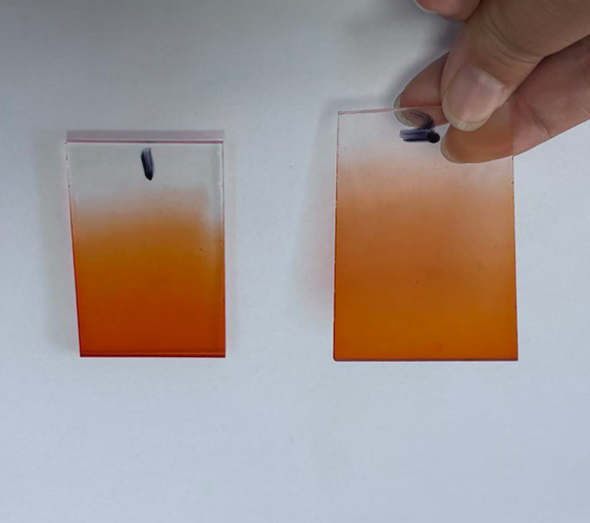
2. Solution Confirmation
Formulate the solution, design the drawings, and confirm the final version.
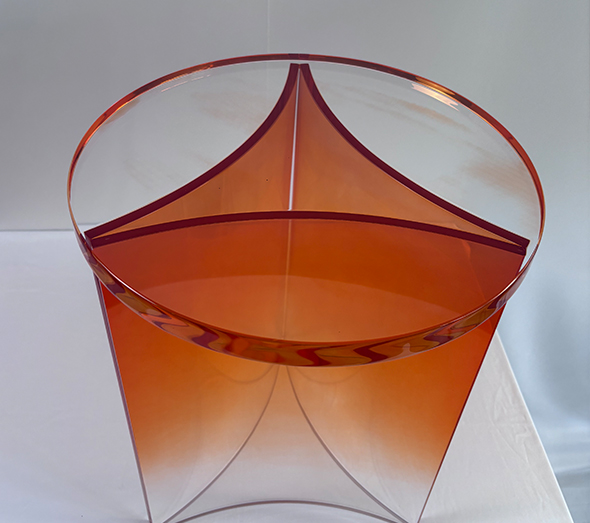
3. Sample Production
The factory designs and produces samples, then sends them to the buyer for confirmation.
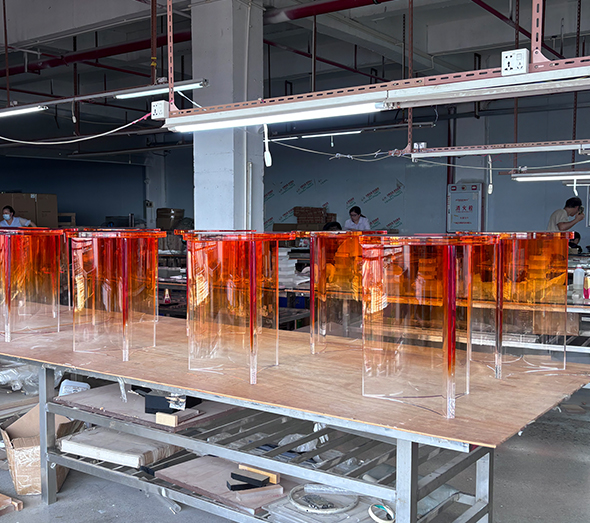
4. Mass Production
The factory starts mass production in accordance with the confirmed samples. No modifications are allowed during production.
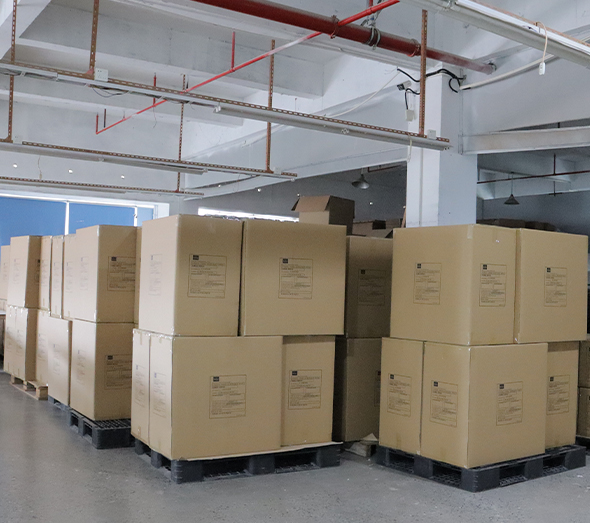
5.Products Shipment
Once production is completed, safe shipment will be arranged after the balance payment is settled.
Packing Facts
Packaging materials
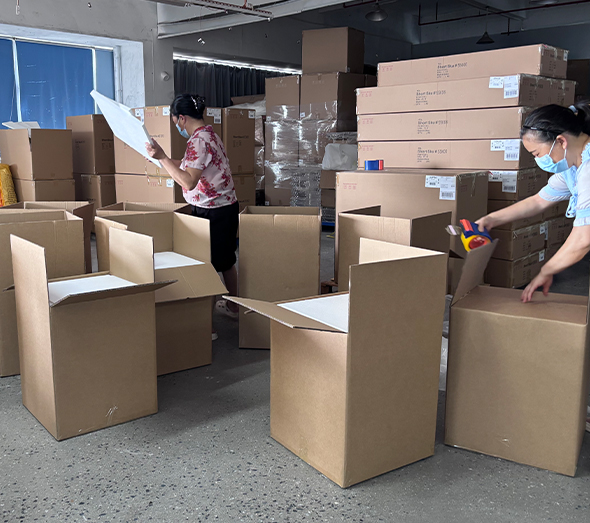
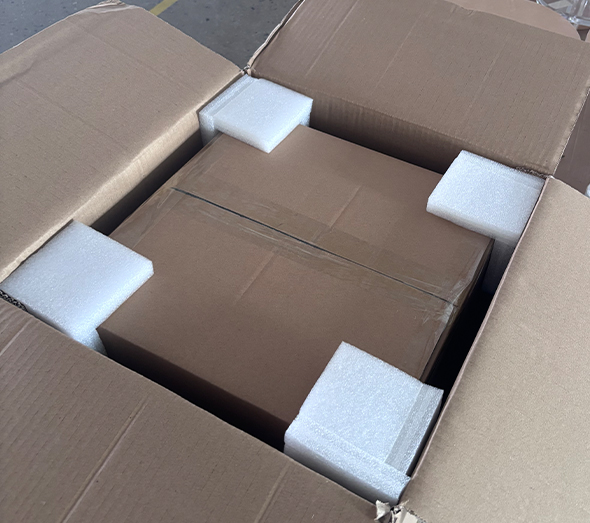
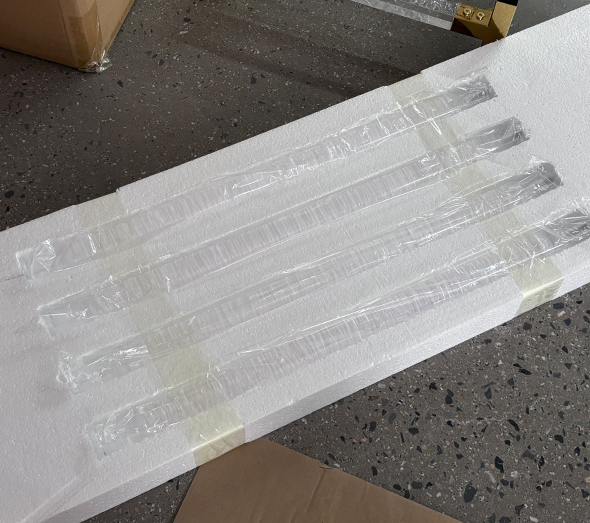
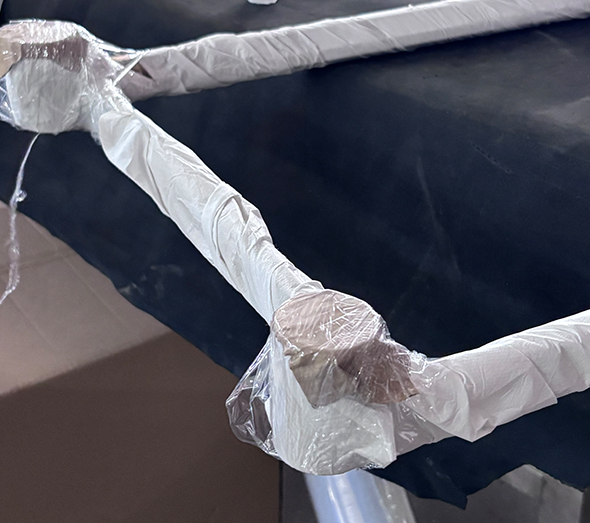
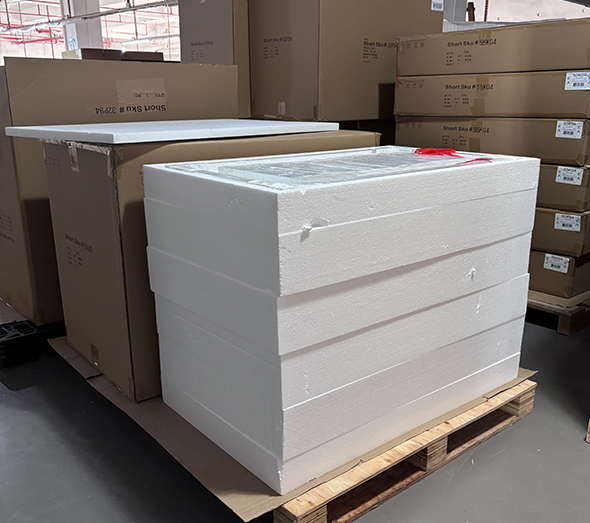
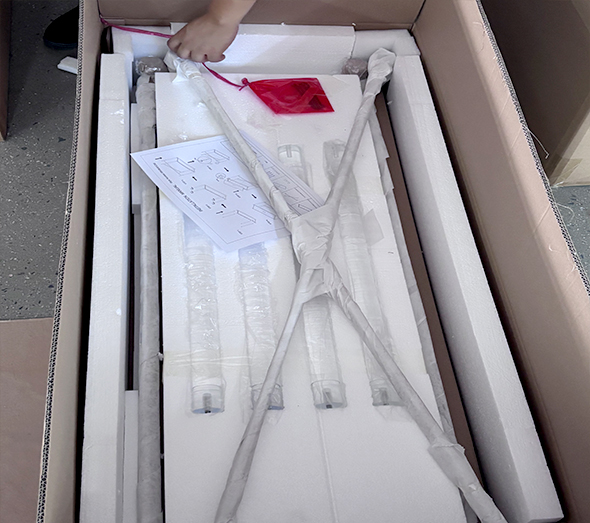
Outer packaging materials:Corrugated Boxes, Honeycomb Boards, Custom Gift Boxes, Wooden box; Cushioning materials:cushioning materials, Air Pillows, EPE, Honeycomb Paper, Kraft Paper Fillers; Sealing and securing materials:BOPP Transparent Tape, Kraft paper tape, Custom Printed Tape, Stretch Film; Special protective materials:Desiccant, Anti-Static Bags……
Surface and Edge Protection
A published acrylic-furniture pack uses PE film or bag, pearl-cotton or bubble separation, foam board, wooden case, and pallet to stop surface contact.
Sets and Carton Identification
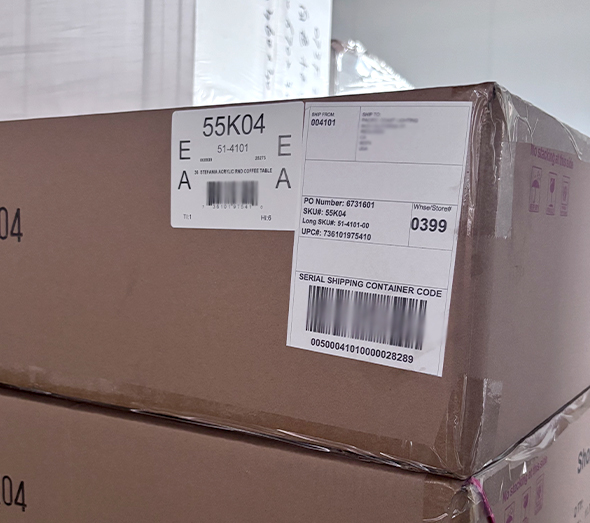
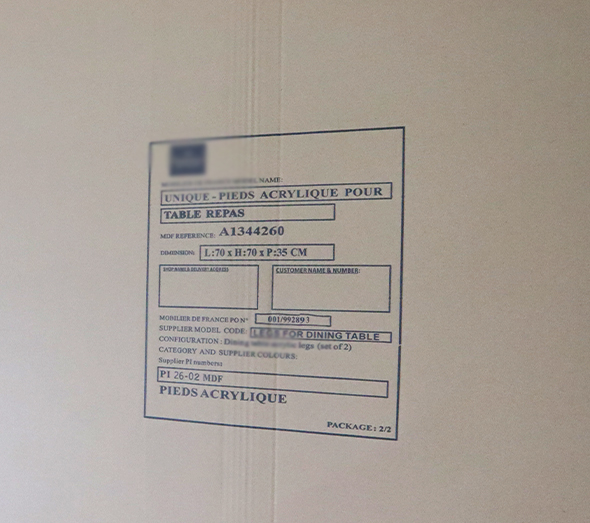
Nesting sizes remain separate SKUs. Carton labels list each size, color, pieces per set, quantity, destination, store, room, or project zone.
FAQ
You can develop round, square, rectangular, oval, waterfall, or storage designs when each option is supported by a complete product specification. Before sampling, define your clear tone, acceptable tint or haze reference, visible zones, edge appearance, joint locations, and hardware-contact areas. Approve these details on the physical sample so your team evaluates the finished product against an agreed appearance standard rather than a vague description.
You should provide a drawing or reference, overall and component dimensions, acrylic thickness, the clear appearance target, edge and joint requirements, construction method, mixed-material responsibilities, hardware, assembly format, branding, quantity by design, packing needs, and destination. Keep the same specification package when comparing suppliers; otherwise, a lower quotation may reflect a different structure, finish, component scope, or packing plan.
Your typical MOQ is 50–200 pieces, depending on the design, material, construction, hardware, packing, and quantity split by style. Sample production is typically 3–7 days after your complete drawing, Clear appearance target, component scope, assembly requirement, quantity plan, and commercial details are confirmed. If you need several designs, list each quantity so the factory can confirm a workable order and sampling plan.
Your approved drawing and physical sample should define the clear tone, acceptable tint or haze appearance, visible surfaces, edge finish, joint and bonding locations, holes, hardware-contact areas, and assembly fit. Use the same approved criteria for first-piece, in-process, and finished-goods comparisons. This gives your quality team a shared visual and construction standard instead of relying on the word “clear” alone.
Your inspection points should cover dimensions, visible surfaces, edges, joints, bonding areas, holes, hardware contact, assembly fit, labels, and the condition before packing. Agree on the checkpoints before production begins. If you request a material, structure, finish, hardware, or packing change after approval, pause the affected work and confirm the revised sample or detail, price impact, and schedule before production continues.
You can choose Fully Assembled, KD, or selected-component separation when the design permits. Confirm the format during sampling because it changes trial assembly, hardware packs, instructions, carton planning, and handling. Your approved packing trial should separate visible acrylic surfaces and edges from loose hardware or dissimilar components, identify every part by SKU, and give your warehouse or customer a clear unpacking and assembly sequence.
Bulk production is typically 10–35 days after your approved sample, final quantities and style split, material and Clear appearance requirements, hardware, assembly format, packing method, and commercial terms are confirmed. More complex structures or multi-style orders may require a different window. Your quotation or order confirmation should record the agreed schedule, approval cut-off, and any customer-supplied item that could delay the production start.
For each repeat order, reference your previous purchase order, approved drawing and sample, Clear appearance standard, edge and joint details, hardware, assembly state, labels, and packing specification. List every requested change instead of assuming the earlier version still applies. If a material, component, construction, finish, or packing detail changes, approve the affected sample or first piece again before the revised units move into bulk production.
Request a Quote for Your Side Table Project
Product Specification
Send your company details, drawing or reference, dimensions, color, intended use, quantity for each design, and destination.
Destination and Timing
Add the preferred packing method, target arrival date, and whether the order is for wholesale, private label, or an interior project.
Commercial Context
We can then review the sample and bulk quotation on the right basis.